Quick Answer: Bearded dragons don’t strictly need baths to survive, but regular bathing (typically once or twice per week) helps with hydration, shedding, and cleanliness. While not mandatory in the wild, captive bearded dragons benefit significantly from supervised soaks in shallow, lukewarm water, especially during shedding periods or if they show signs of dehydration or constipation.
Key Takeaways
- Bathing is optional but highly beneficial for captive bearded dragons, supporting hydration and healthy shedding
- Most adult bearded dragons should be bathed 1-2 times per week; babies may need more frequent baths (2-3 times weekly)
- Water temperature should be between 85-92°F (29-33°C), tested with a thermometer before placing your dragon in the bath
- Bath sessions should last 10-20 minutes in water shallow enough that your dragon can stand with its head above the surface
- Never leave your bearded dragon unattended during bath time
- Tap water is generally safe for baths, but let chlorinated water sit for 24 hours or use a dechlorinator
- Signs of dehydration include sunken eyes, wrinkled skin, and lethargy, bathing can help rehydrate your dragon
- Over-bathing (daily or multiple times per day) can strip natural oils and cause stress

Automatic Water Circulation with 26-Hole Rain Shower: This electric bearded dragon water fountain features a quiet 5V low-voltage pump that keeps water circulating continuously. The 26-hole shower head delivers a gentle, even rainfall-like flow, creating a comfortable bathing experience for bearded dragons, lizards, turtles, snakes, and other small reptiles.

DURABLE MATERIAL: The reptile ramp plate is made of environmentally friendly plastic material, very durable and strong, strong toughness, anti-drop, easy to clean, smooth edges, don't worry about hurting your pet.

【Warm & Comfortable Material】The lizard bed and pillow are made of durable and breathable canvas, filled with PP cotton. This blanket has a soft and comfortable surface. The hammock is made of canvas material. The hammock is suitable for reptiles to rest and play on
Do Bearded Dragons Actually Need Baths or Is It Optional?
Bathing is optional for bearded dragon survival but strongly recommended for their overall health and comfort in captivity. In their native Australian habitat, bearded dragons don’t take baths, they get moisture from morning dew, occasional rain, and their food. However, captive environments are typically drier than their natural range, and bathing helps compensate for this difference.
Regular baths serve multiple purposes beyond simple cleanliness:
- Hydration support: Bearded dragons absorb water through their skin and cloaca (the opening used for waste elimination). A 15-minute soak can provide significant hydration, especially for dragons that don’t drink much from their water dish.
- Shedding assistance: Warm water softens old skin, making it easier for your dragon to shed completely without retained patches that can restrict circulation.
- Digestive aid: The combination of warm water and gentle movement can help stimulate bowel movements, particularly helpful for dragons prone to constipation.
- Waste removal: Bearded dragons often defecate in their bath water, which keeps their enclosure cleaner and reduces the risk of bacterial infections from sitting in soiled substrate.
Choose bathing if your dragon shows signs of dehydration, is going through a shed, hasn’t defecated in several days, or if you notice substrate stuck to their body. Skip baths if your dragon is severely stressed by water, though most can be gradually acclimated with patience.
For more comprehensive guidance on creating the ideal environment for your bearded dragon, check out our complete tank setup guide.
How Often Should I Bathe My Bearded Dragon?
Adult bearded dragons typically benefit from bathing once or twice per week, while juveniles and babies may need 2-3 baths weekly due to their faster growth and more frequent shedding cycles. The ideal frequency depends on several individual factors including your dragon’s age, health status, humidity levels in your home, and personal habits.
Bathing frequency by age:
- Babies (0-6 months): 2-3 times per week to support rapid growth and frequent sheds
- Juveniles (6-18 months): 2 times per week during active growth periods
- Adults (18+ months): 1-2 times per week for maintenance
- Seniors (8+ years): 1-2 times per week, with extra attention during sheds
Adjust frequency based on these factors:
- Increase baths during shedding periods (you’ll notice dull, patchy skin)
- Add extra baths if your dragon hasn’t defecated in 3-4 days
- Reduce frequency if your dragon shows extreme stress or if their skin appears overly dry after bathing
- Consider more frequent baths in winter when indoor heating reduces humidity
Common mistake: Bathing daily or multiple times per day can strip the natural oils from your dragon’s skin, leading to dryness and irritation. Unless specifically recommended by a reptile veterinarian for a medical condition, stick to the 1-3 times per week guideline.
What Happens If I Never Bathe My Bearded Dragon?
If you never bathe your bearded dragon, it will likely survive but may experience more difficulty with shedding, increased risk of dehydration, and potential constipation issues. Many bearded dragons live without regular baths, but they typically require more careful attention to humidity levels, hydration methods, and overall health monitoring.
Potential consequences of skipping baths entirely:
- Incomplete sheds: Without the moisture assistance from bathing, your dragon may develop stuck shed on toes, tail tip, or around the eyes. Retained shed can constrict blood flow and lead to tissue damage or loss of digits.
- Dehydration: Dragons that don’t drink readily from water dishes may become chronically dehydrated, leading to kidney problems, lethargy, and reduced appetite.
- Constipation: The lack of warm water stimulation can contribute to irregular bowel movements, particularly in dragons fed diets high in insects with hard exoskeletons.
- Substrate impaction: Without regular baths to help pass accidentally ingested substrate, your dragon faces higher risk of intestinal blockages.
However, you can maintain a healthy dragon without traditional baths if you:
- Provide a large, shallow water dish that your dragon can soak in voluntarily
- Maintain proper humidity levels (30-40%) in the enclosure
- Mist your dragon and enclosure regularly
- Offer water-rich foods like cucumber and bell peppers
- Monitor for signs of dehydration and intervene when necessary
The key is ensuring your dragon receives adequate hydration and shedding support through alternative methods if you choose not to bathe regularly.
Bearded Dragon Bath vs Misting: Which Is Better?
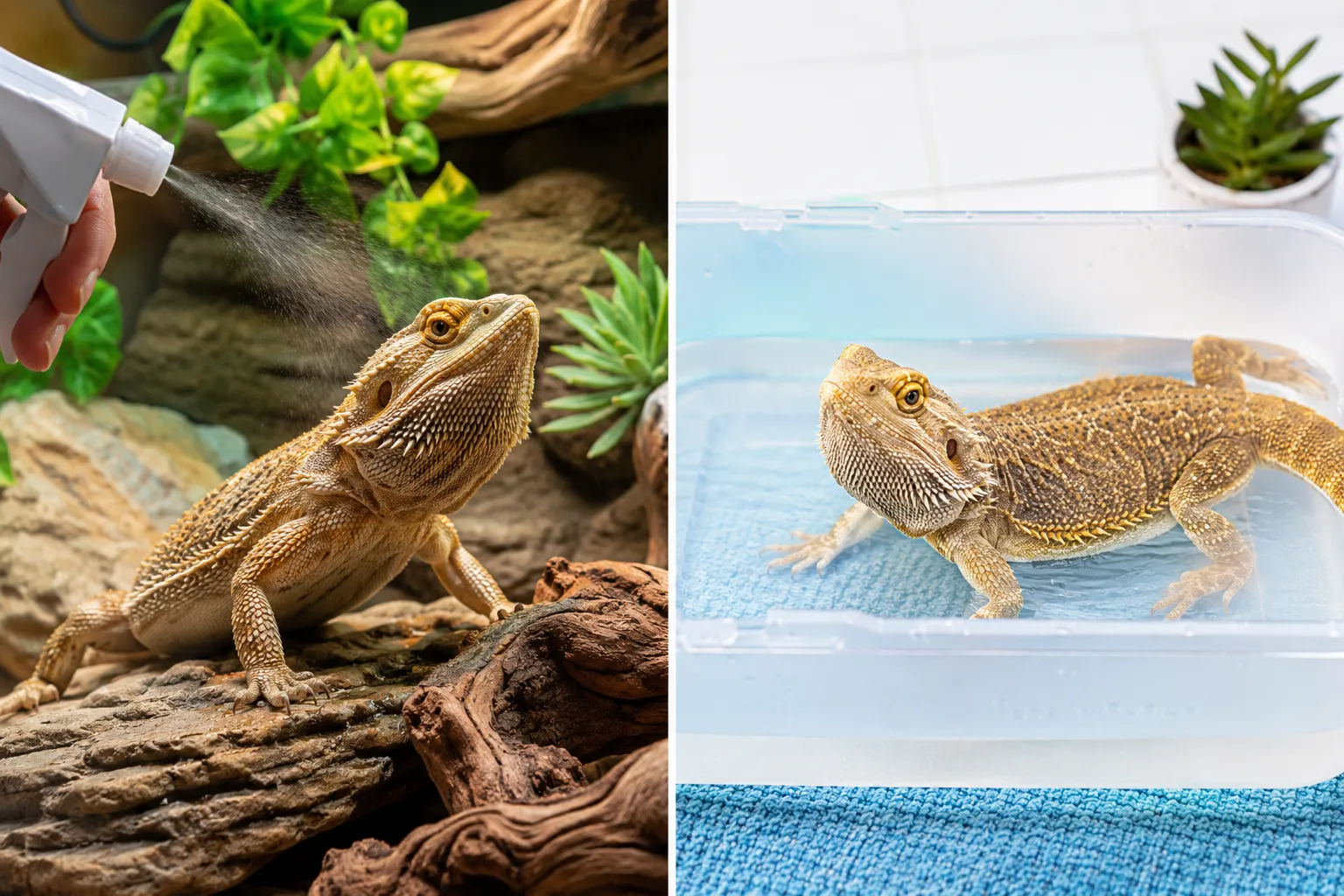
Bathing is generally more effective than misting for hydration and shedding support, but both methods serve different purposes and work best when used together. Bathing provides deeper hydration through skin absorption and helps with digestion, while misting maintains daily humidity levels and offers quick moisture boosts.
Bathing advantages:
- Provides significant hydration through prolonged skin contact with water
- Stimulates bowel movements and aids digestion
- Thoroughly softens stuck shed across the entire body
- Allows you to inspect your dragon closely for health issues
- Removes substrate and waste from the body
Misting advantages:
- Quick and convenient for daily humidity maintenance
- Less stressful for dragons that dislike full baths
- Helps with minor shedding between baths
- Provides drinking opportunities for dragons that lick water droplets
- Can be done multiple times daily without over-hydrating
Best practice: Use bathing 1-2 times per week for deep hydration and shedding support, and mist your dragon and enclosure 1-2 times daily to maintain baseline humidity. This combination approach addresses both immediate moisture needs and long-term hydration.
Choose misting over bathing if your dragon is extremely stressed by water immersion, is recovering from illness and shouldn’t be moved frequently, or if you need to provide quick moisture between scheduled baths. Choose bathing when your dragon is actively shedding, showing signs of constipation, or hasn’t had a thorough soak in over a week.
How to Give a Bearded Dragon a Bath Step by Step
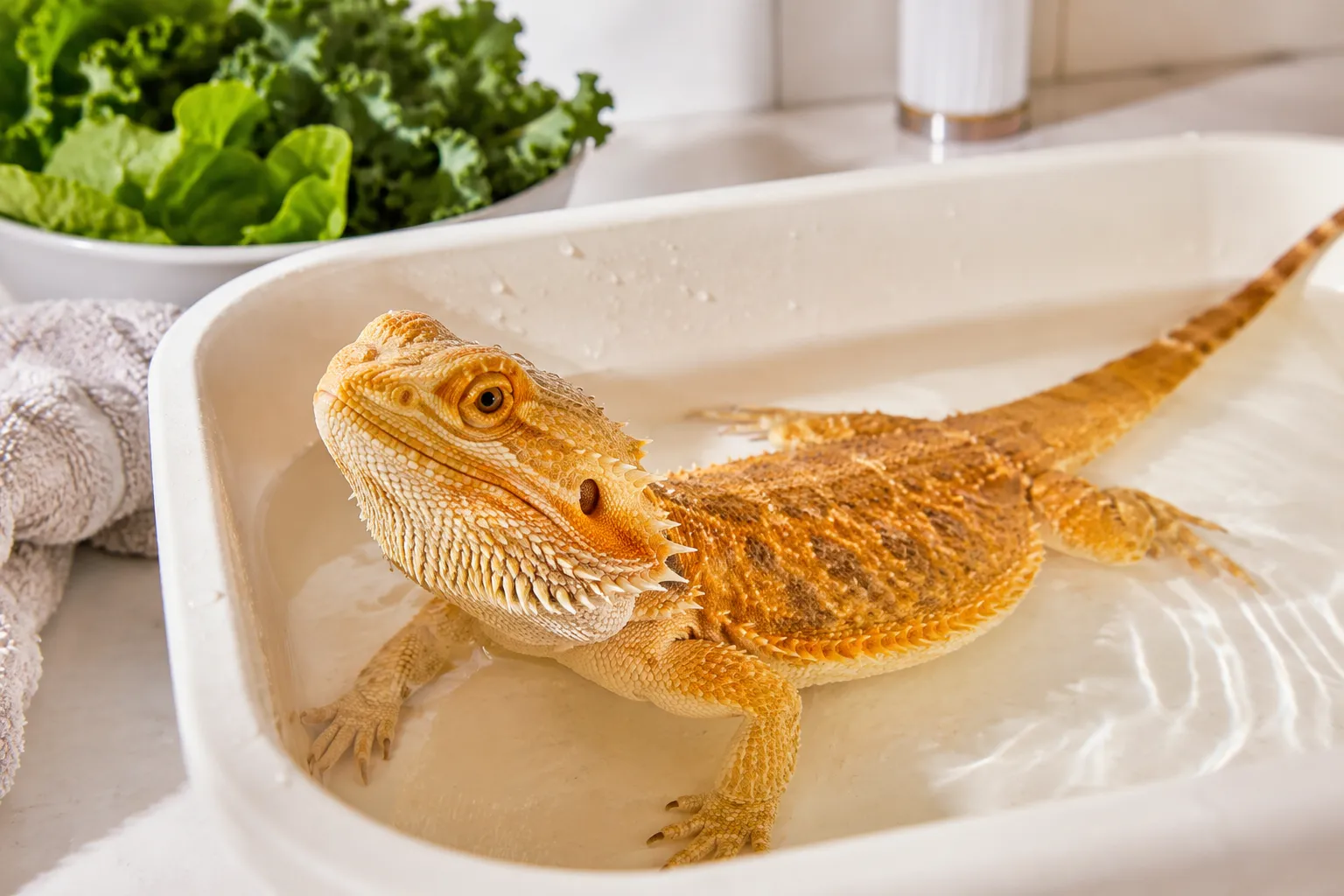
Giving your bearded dragon a proper bath requires careful preparation and attention to safety. The entire process typically takes 15-25 minutes from setup to drying, and should always be supervised to prevent drowning or escape.
Step-by-step bathing process:
Prepare the bath container: Use a plastic tub, sink, or bathtub that’s easy to clean. Avoid using the same container for human food preparation.
Fill with lukewarm water: Add water to a depth where your dragon can stand comfortably with its head well above the surface, typically 1-2 inches for adults, less for juveniles. The water should reach roughly mid-leg height.
Check water temperature: Use a thermometer to verify the water is between 85-92°F (29-33°C). Water that’s too cool can cause stress and respiratory issues; water that’s too hot can burn your dragon.
Gently place your dragon in the water: Support your dragon’s body and lower it slowly into the bath. Never drop or force your dragon into the water.
Allow soaking time: Let your dragon soak for 10-20 minutes. You can gently pour water over their back using your hand or a small cup, but avoid getting water in their nostrils.
Assist with shedding if needed: If you see loose shed, you can very gently rub it with your finger or a soft toothbrush. Never pull shed that isn’t ready to come off.
Monitor constantly: Never leave your bearded dragon unattended in water. Watch for signs of stress like frantic swimming, arm waving, or attempts to escape.
Remove and dry: After 10-20 minutes, lift your dragon out and gently pat dry with a clean towel. Pay special attention to drying between toes and skin folds.
Return to warm enclosure: Place your dragon back in its tank under the basking light to finish warming and drying completely.
Safety tips: Clean the bath container with reptile-safe disinfectant after each use, especially if your dragon defecated. Never use soap or shampoo on your dragon. If your dragon poops during the bath, you can either end the session or quickly change the water and continue.
What Temperature Should Bearded Dragon Bath Water Be?
Bearded dragon bath water should be between 85-92°F (29-33°C), which feels lukewarm to slightly warm when you test it with your wrist or elbow. This temperature range mimics the warmth your dragon experiences under its basking light and prevents thermal shock while encouraging relaxation and hydration.
Why temperature matters:
- Too cold (below 80°F/27°C): Can cause stress, suppress immune function, and potentially lead to respiratory infections. Cold water also discourages drinking and may cause your dragon to panic.
- Too hot (above 95°F/35°C): Risks burning your dragon’s sensitive skin and can cause overheating, especially if combined with the stress of bathing.
- Just right (85-92°F/29-33°C): Promotes relaxation, encourages drinking and absorption, aids digestion, and softens shed skin effectively.
How to test water temperature:
- Use a thermometer: The most accurate method is a digital or analog aquarium thermometer. Test the water before placing your dragon in the bath.
- Wrist or elbow test: If you don’t have a thermometer, test the water against the inside of your wrist or elbow (more sensitive than your hand). It should feel comfortably warm but not hot.
- Adjust as needed: Water cools during the bath, especially in cooler rooms. You may need to add small amounts of warm water during longer soaking sessions, but always test the temperature first and add water away from your dragon.
Common mistake: Using water that feels “just warm” to your hand may actually be too cool for your bearded dragon. Human hands are less temperature-sensitive than the inside of your wrist, so always use your wrist or a thermometer for accuracy.
For more guidance on maintaining proper temperatures in your dragon’s environment, see our article on optimal tank setup.
My Bearded Dragon Hates Baths: What Should I Do?
If your bearded dragon hates baths, you can gradually acclimate them through shorter sessions, shallower water, and positive reinforcement, or you can rely on alternative hydration methods like misting and providing a shallow soaking dish. Not all bearded dragons enjoy bathing, and forcing a severely stressed dragon into water can do more harm than good.
Signs your dragon is stressed by bathing:
- Frantic swimming or thrashing
- Puffing up the beard and turning it black
- Hissing or opening the mouth aggressively
- Attempting to climb out repeatedly
- Defecating immediately (stress response)
- Glass surfing behavior after baths (learn more about glass surfing causes)
Gradual acclimation techniques:
- Start with very shallow water: Use just enough water to cover the bottom of the container (1/4 inch) so your dragon feels secure.
- Shorten bath time: Begin with 3-5 minute sessions and gradually increase as your dragon becomes more comfortable.
- Warm up first: Place your dragon under its basking light for 20-30 minutes before bathing so it’s fully warmed and more relaxed.
- Add familiar objects: Place a smooth rock or branch in the bath that your dragon can grip, providing a sense of security.
- Offer treats during or after: Give your dragon a favorite food like hornworms immediately after bathing to create positive associations.
- Stay calm: Your dragon can sense your stress. Move slowly, speak softly, and remain patient throughout the process.
Alternative hydration methods if baths remain too stressful:
- Provide a large, shallow water dish (2-3 inches deep) in the cool end of the enclosure for voluntary soaking
- Mist your dragon directly 2-3 times daily, focusing on the head and back
- Offer water-rich vegetables like cucumber and zucchini
- Use a dropper or syringe to place water droplets on your dragon’s nose, which they may lick off
- Increase enclosure humidity slightly during shedding periods
When to consult a vet: If your dragon shows signs of dehydration or incomplete sheds despite alternative hydration methods, consult a reptile veterinarian. They may recommend specific hydration techniques or identify underlying health issues.
Can Bathing a Bearded Dragon Too Much Be Harmful?
Yes, bathing a bearded dragon too frequently (daily or multiple times per day) can strip natural skin oils, cause stress, and potentially lead to skin dryness or bacterial infections from excessive moisture exposure. While bathing is beneficial in moderation, over-bathing disrupts your dragon’s natural skin barrier and can create more problems than it solves.
Risks of over-bathing:
- Dry, flaky skin: Excessive water exposure removes the natural oils that keep your dragon’s skin supple and healthy
- Increased stress: Daily handling and bathing can elevate stress hormones, suppressing appetite and immune function
- Bacterial or fungal infections: Constantly damp skin, especially in skin folds, creates an environment where harmful microorganisms can thrive
- Disrupted thermoregulation: Too much time away from the basking area can interfere with your dragon’s ability to maintain proper body temperature
- Behavioral changes: Over-stressed dragons may become aggressive, lethargic, or develop unusual behaviors
Signs you’re bathing too frequently:
- Skin appears unusually dry or flaky between baths
- Your dragon becomes increasingly resistant or stressed during bath time
- Redness or irritation around skin folds
- Decreased appetite or lethargy
- Excessive shedding or patchy shed patterns
Recommended maximum frequency:
- Adults: No more than 2-3 times per week under normal circumstances
- Juveniles: No more than 3 times per week
- During heavy shed: You can increase to once daily for 2-3 days, then return to normal schedule
- Medical situations: Follow your veterinarian’s specific instructions, which may temporarily require more frequent bathing
Exception: If your reptile veterinarian prescribes daily or twice-daily baths for a specific medical condition (such as severe constipation, impaction, or certain skin conditions), follow their guidance. Medical bathing protocols are temporary and supervised by a professional.

HELP YOUR REPTILE SHED with a penetrating reptile bath; A simple 20 minute soak can help old skin slide off with ease
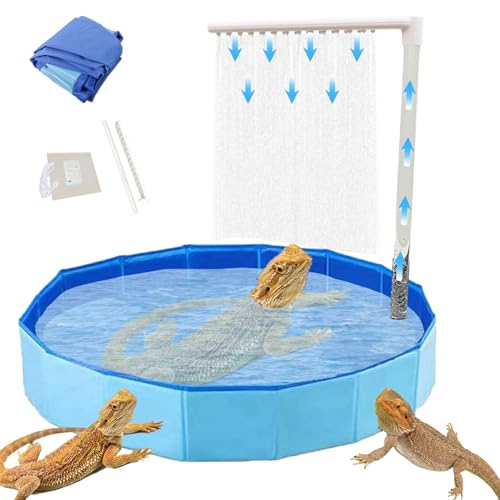
🌈 【Great Bearded Dragon Supplies】: Our Bearded Dragon Bath is foldable and comes with a 5V low-voltage pump for silent, continuous, and stable operation. The faucet, with 26 outlets, ensures uniform water distribution and a gentle flow, providing a comfortable bathing and play experience for bearded dragons, lizards, and other reptiles.

🌈 【Bearded Dragon Bathtub with Two Size Options】: This set offers two bathtub and towel size options to fit different bearded dragon sizes. The Large bathtub is suitable for adult bearded dragons, while the Medium bathtub works well for juveniles and smaller reptiles.
Do Baby Bearded Dragons Need Baths More Than Adults?
Baby bearded dragons typically benefit from more frequent baths (2-3 times per week) compared to adults (1-2 times per week) because they grow rapidly, shed more often, and are more prone to dehydration due to their higher surface-area-to-volume ratio. However, baby dragons are also more delicate and require extra care during bathing to prevent drowning or stress.
Why babies need more frequent baths:
- Rapid growth and frequent shedding: Babies can shed every few weeks during their first six months, and regular baths help prevent stuck shed on tiny toes and tail tips
- Higher dehydration risk: Smaller bodies lose moisture more quickly, and babies may not drink as reliably from water dishes
- Digestive support: Baby dragons eat frequently (multiple times daily), and regular baths help maintain healthy digestion and regular bowel movements
- Substrate concerns: Curious babies are more likely to accidentally ingest substrate, and baths can help pass small amounts before they cause problems
Special considerations for bathing baby bearded dragons:
- Use very shallow water: Water should be no deeper than 1/2 inch for babies, just enough to cover their feet
- Shorter sessions: Limit baths to 5-10 minutes for babies versus 10-20 minutes for adults
- Warmer water: Aim for the higher end of the temperature range (90-92°F/32-33°C) since babies chill more quickly
- Constant supervision: Babies can tire and potentially drown in even shallow water, never look away
- Gentle handling: Baby dragons are fragile; support their entire body when moving them in and out of the bath
- Immediate warming: Return babies to their basking spot right after drying to prevent respiratory issues
Bathing frequency by baby dragon age:
- 0-2 months: 2-3 times per week, focusing on hydration and shed support
- 2-4 months: 2-3 times per week, especially during visible shed periods
- 4-6 months: 2 times per week as growth rate begins to slow
- 6-12 months (juvenile): Transition to adult schedule of 1-2 times per week
For more information on caring for young bearded dragons, including feeding schedules, check out our guide on how many crickets baby beardies should eat.
Signs My Bearded Dragon Is Dehydrated and Needs a Bath
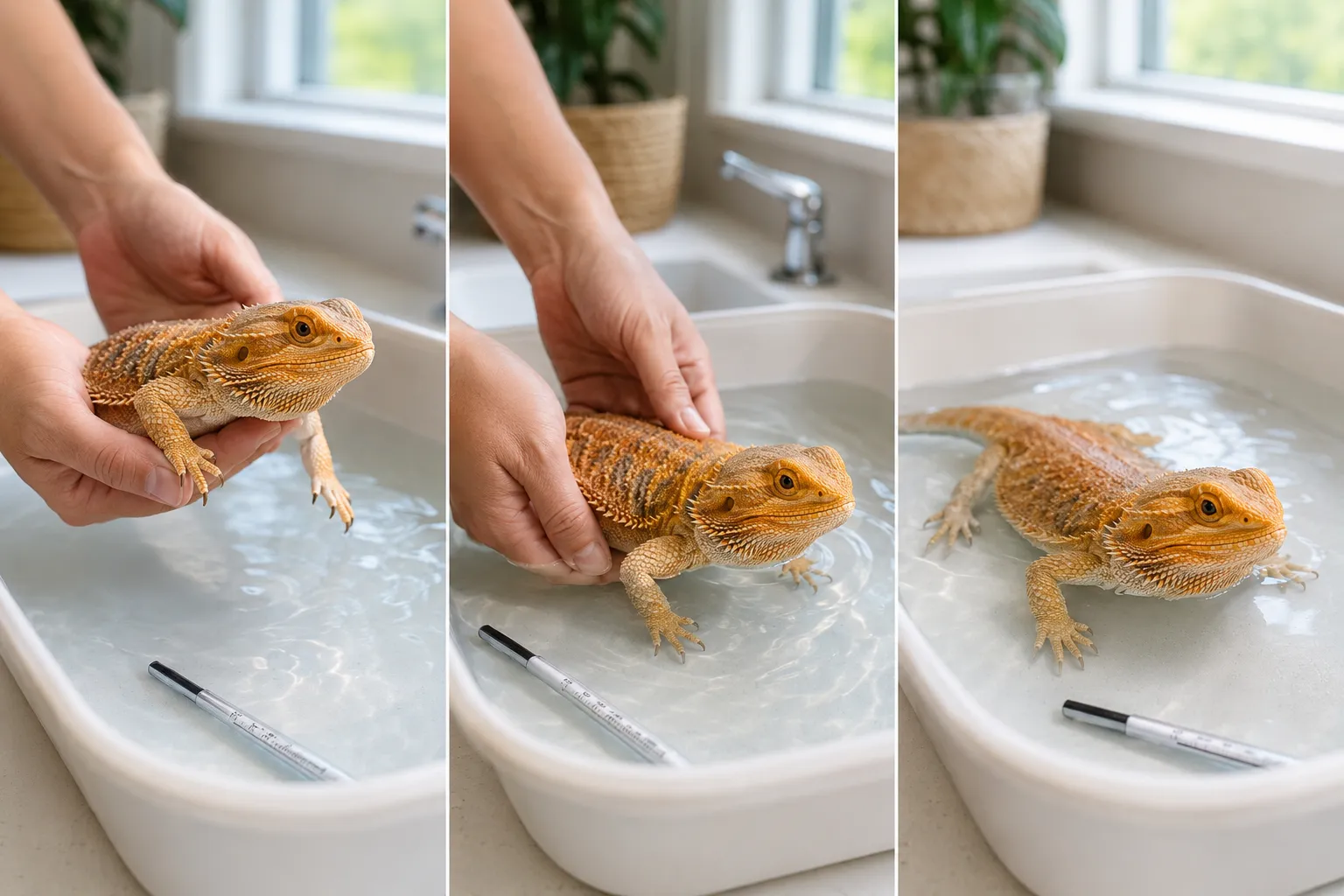
A dehydrated bearded dragon typically shows sunken eyes, wrinkled or loose skin (especially noticeable when gently pinched), lethargy, loss of appetite, and infrequent defecation. If you notice these signs, a 15-20 minute bath in lukewarm water can provide immediate hydration support while you address the underlying causes.
Primary dehydration symptoms:
- Sunken eyes: The eyes appear recessed into the skull rather than bright and prominent
- Skin tenting: When you gently pinch the skin on the back, it stays “tented” for several seconds instead of immediately returning to normal
- Wrinkled skin: The skin appears loose, baggy, or excessively wrinkled, particularly around the legs and neck
- Thick, stringy saliva: The mouth appears dry with thick, ropy saliva instead of clear, thin moisture
- Infrequent urination: Urates (the white part of dragon waste) appear very dry, chalky, or are absent for several days
Secondary dehydration symptoms:
- Lethargy or reduced activity levels (also see why bearded dragons sleep excessively)
- Loss of appetite or refusing food
- Constipation (no bowel movement for 5+ days in adults, 3+ days in juveniles)
- Dull, lackluster coloring
- Weakness or difficulty moving
Immediate response to dehydration:
- Give a bath: Place your dragon in 85-92°F water for 15-20 minutes to allow skin absorption
- Offer water directly: Use a dropper to place water droplets on your dragon’s nose, which it may lick
- Provide water-rich foods: Offer cucumber, watermelon, or bell peppers
- Check enclosure conditions: Verify that temperatures aren’t too high (which increases water loss) and that a water dish is available
When to see a veterinarian: If your dragon shows severe dehydration symptoms (very sunken eyes, inability to stand, extreme lethargy) or doesn’t improve after 24-48 hours of increased hydration efforts, seek immediate veterinary care. Severe dehydration may require subcutaneous fluids administered by a professional.
Prevention: Maintain proper humidity (30-40%), provide fresh water daily, offer regular baths, include water-rich vegetables in the diet, and ensure your dragon isn’t overheating under the basking light.
Common Mistakes When Bathing Bearded Dragons
The most common bathing mistakes include using water that’s too deep (risking drowning), incorrect temperature (causing stress or burns), leaving dragons unattended, and bathing too frequently. Understanding these errors helps you provide safe, beneficial baths that support your dragon’s health rather than compromising it.
Top bathing mistakes and how to avoid them:
1. Water too deep
- Mistake: Filling the bath so water reaches your dragon’s back or neck
- Risk: Drowning, panic, stress
- Correct approach: Water should reach mid-leg height, allowing your dragon to stand with its head well above the surface
2. Wrong water temperature
- Mistake: Using water that feels “warm enough” without testing
- Risk: Thermal shock, stress, respiratory issues, or burns
- Correct approach: Always use a thermometer to verify 85-92°F (29-33°C)
3. Leaving dragon unattended
- Mistake: Walking away “just for a minute” during bath time
- Risk: Drowning, escape, injury from jumping out
- Correct approach: Stay with your dragon for the entire bath, maintaining visual contact
4. Using soap or shampoo
- Mistake: Adding soap, bubble bath, or pet shampoo to the water
- Risk: Skin irritation, ingestion of harmful chemicals, disruption of natural skin oils
- Correct approach: Use only plain water; bearded dragons don’t need soap
5. Forcing a stressed dragon
- Mistake: Holding down a panicking dragon or ignoring stress signals
- Risk: Injury to dragon or handler, increased stress, negative associations with bathing
- Correct approach: If your dragon is extremely stressed, end the bath early and try gradual acclimation techniques
6. Bathing immediately after feeding
- Mistake: Giving a bath within 1-2 hours of a large meal
- Risk: Regurgitation, digestive upset
- Correct approach: Wait at least 2 hours after feeding before bathing, or bathe before meals
7. Not drying properly
- Mistake: Returning a wet dragon directly to its enclosure
- Risk: Respiratory infections, substrate sticking to wet skin, fungal growth
- Correct approach: Pat dry with a clean towel, then place under basking light to finish drying
8. Using dirty water or containers
- Mistake: Reusing bath water between dragons or not cleaning containers
- Risk: Bacterial infections, parasite transmission, illness
- Correct approach: Use fresh water for each bath and clean containers with reptile-safe disinfectant
9. Over-bathing
- Mistake: Bathing daily or multiple times per day without veterinary guidance
- Risk: Dry skin, stress, disrupted natural oils
- Correct approach: Stick to 1-2 times per week for adults, 2-3 times for juveniles
10. Ignoring water quality
- Mistake: Using heavily chlorinated or contaminated water
- Risk: Skin irritation, ingestion of harmful chemicals
- Correct approach: Let tap water sit 24 hours to dechlorinate, or use a water conditioner
Can I Use Tap Water for Bearded Dragon Baths?
Yes, tap water is generally safe for bearded dragon baths in most areas, but you should let heavily chlorinated water sit for 24 hours before use or treat it with a reptile-safe dechlorinator. The chlorine levels in most municipal water supplies are low enough that they won’t harm your dragon during a bath, but reducing chlorine is a simple precaution that eliminates any risk.
Tap water considerations:
Chlorine and chloramine:
- Most tap water contains chlorine or chloramine as disinfectants
- Brief exposure during bathing is typically safe, but prolonged or repeated exposure can irritate skin
- Solution: Fill the bath container 24 hours ahead and let it sit uncovered (chlorine evaporates), or add a few drops of aquarium water conditioner
Water hardness:
- Hard water (high mineral content) is safe for bathing and won’t harm your dragon
- Some dragons may develop mineral deposits on their scales with very hard water, but this is cosmetic and harmless
- Solution: No action needed; hard water is fine for baths
Well water:
- Private well water is usually safe if it’s safe for human use
- Test well water periodically for contaminants, especially if you notice changes in your dragon’s skin or behavior
- Solution: Use the same water you drink, or have it tested if concerned
Contaminated water:
- Avoid water with high levels of heavy metals, nitrates, or other contaminants
- If your tap water isn’t safe for human consumption, don’t use it for your dragon
- Solution: Use bottled water or filtered water for baths
Temperature from tap:
- Never place your dragon in water straight from the hot tap without testing
- Hot water heaters can produce water hot enough to burn
- Solution: Always mix to proper temperature (85-92°F) and test with a thermometer
Best practices:
- Use the same water you’d drink yourself
- Let chlorinated water sit overnight if your dragon bathes frequently
- Always test temperature before bathing
- Consider a simple aquarium dechlorinator if your water is heavily treated
- If you notice skin irritation, switch to filtered or bottled water
When to use bottled or filtered water: If your tap water has a strong chemical smell, causes skin irritation, or if your area has water quality advisories, use bottled spring water or filtered water instead.
How Long Should a Bearded Dragon Soak in Water?
A bearded dragon should soak in water for 10-20 minutes during a typical bath, which provides enough time for hydration, shedding assistance, and potential bowel movements without causing stress or excessive cooling. Shorter baths (5-10 minutes) work well for babies or stressed dragons, while longer soaks (up to 25 minutes) may be appropriate during heavy sheds or for constipation relief.
Optimal soaking time by purpose:
- General maintenance bath: 10-15 minutes for hydration and cleanliness
- Shedding support: 15-20 minutes to thoroughly soften stuck shed
- Constipation relief: 15-25 minutes to stimulate bowel movements
- Baby dragons: 5-10 minutes to prevent exhaustion and chilling
- Stressed dragons: 5-10 minutes to minimize anxiety while still providing benefits
- Quick rinse: 3-5 minutes to remove substrate or waste without a full soak
Signs it’s time to end the bath:
- Your dragon has defecated (you can end immediately or change water and continue)
- The water has cooled below 85°F despite adding warm water
- Your dragon shows signs of stress (frantic swimming, repeated escape attempts)
- Your dragon appears tired or is struggling to keep its head up
- You’ve reached the 20-25 minute mark
What happens during different soak durations:
- 0-5 minutes: Surface hydration begins, dragon adjusts to water temperature
- 5-10 minutes: Skin absorption increases, shed begins to soften, dragon may drink
- 10-15 minutes: Optimal hydration achieved, digestive stimulation occurs
- 15-20 minutes: Maximum shedding assistance, bowel movements often occur
- 20+ minutes: Diminishing returns; risk of stress or cooling increases
Common mistake: Leaving your dragon in the bath for 30-45 minutes or longer provides no additional benefit and increases stress. Even if your dragon appears calm, prolonged soaking can be tiring and may lower body temperature too much.
Adjusting soak time: If your dragon consistently becomes stressed before 10 minutes, gradually work up to longer sessions over several weeks. If your dragon seems perfectly content after 20 minutes, you can extend slightly, but always monitor for signs of fatigue or cooling.
Alternatives to Bathing for Bearded Dragon Hydration
If traditional bathing isn’t working for your bearded dragon, effective alternatives include providing a shallow soaking dish in the enclosure, regular misting, offering water-rich foods, using a dripper system, and hand-watering with a syringe. These methods can provide adequate hydration for dragons that are stressed by baths or for keepers who prefer different approaches.
Alternative hydration methods:
1. Shallow soaking dish
- Place a large, shallow dish (2-3 inches deep) in the cool end of the enclosure
- Many dragons will voluntarily soak when they need hydration
- Change water daily to prevent bacterial growth
- Best for: Dragons that dislike being handled for baths but will soak independently
2. Regular misting
- Mist your dragon directly 1-3 times daily with lukewarm water
- Focus on the head, back, and sides; avoid spraying directly in the face
- Many dragons will lick water droplets from their nose and body
- Best for: Daily humidity maintenance and dragons that drink from droplets
3. Water-rich vegetables
- Offer high-moisture foods like cucumber (96% water), zucchini (95% water), bell peppers (92% water), and watermelon (92% water)
- These provide both nutrition and hydration
- Best for: Supplementing other hydration methods and picky drinkers
4. Dripper or fountain system
- Install a reptile dripper that creates moving water droplets
- Some dragons are attracted to moving water and will drink more readily
- Requires daily cleaning to prevent bacterial growth
- Best for: Dragons that ignore standing water but respond to movement
5. Hand-watering with syringe
- Use a needleless syringe to place water droplets on your dragon’s nose
- Many dragons will lick the droplets; never force water into the mouth
- Offer 5-10 droplets once or twice daily
- Best for: Severely dehydrated dragons or those recovering from illness
6. Increased enclosure humidity
- Maintain humidity at 35-40% (higher end of the range) during shedding
- Use a hygrometer to monitor levels
- Mist the enclosure (not just the dragon) to raise ambient humidity
- Best for: Supporting hydration between other methods
7. Humid hide
- Create a hide box with damp (not wet) sphagnum moss
- Dragons can enter when they need extra moisture, especially during sheds
- Replace moss weekly to prevent mold
- Best for: Providing optional moisture without forced interaction
Combining methods: The most effective approach often combines 2-3 methods. For example, provide a shallow soaking dish, mist daily, and offer water-rich vegetables. This ensures your dragon has multiple hydration opportunities throughout the day.
Monitoring hydration: Regardless of which methods you use, regularly check for signs of proper hydration (bright eyes, elastic skin, regular defecation) and dehydration symptoms (sunken eyes, wrinkled skin, lethargy). Adjust your approach if you notice any concerning changes.
Frequently Asked Questions
Should I bathe my bearded dragon before or after feeding?
Bathe your bearded dragon at least 2 hours after feeding or before meals to prevent regurgitation. Bathing immediately after eating can cause digestive upset because the warm water and movement may interfere with digestion. Morning baths before the first meal of the day work well for most dragons.
Can bearded dragons drown in their bath?
Yes, bearded dragons can drown if the water is too deep or if they’re left unattended. Always use shallow water (mid-leg height), never leave your dragon unsupervised, and watch for signs of fatigue. Even strong swimmers can tire and struggle to keep their heads above water.
Why does my bearded dragon poop every time I bathe it?
Bearded dragons often defecate during baths because the warm water relaxes their muscles and stimulates bowel movements. This is normal and actually beneficial, many keepers use baths specifically to encourage regular defecation and keep the enclosure cleaner.
Is it normal for my bearded dragon to drink during baths?
Yes, many bearded dragons drink during baths by licking water from the surface or absorbing it through their skin and cloaca. You may see your dragon opening and closing its mouth or appearing to “taste” the water, this is normal drinking behavior.
Can I bathe multiple bearded dragons together?
No, never bathe multiple bearded dragons in the same water at the same time. This can spread parasites, bacteria, and diseases between dragons. It also increases stress and may trigger territorial aggression. Always bathe dragons separately with fresh water for each.
Should I bathe my bearded dragon during brumation?
Offer a bath every 2-3 weeks during brumation to prevent dehydration, but keep sessions brief (5-10 minutes) and only if your dragon is awake enough to respond. Never force a deeply brumating dragon into water. If your dragon wakes periodically, a short bath can help maintain hydration during this dormant period.
What should I do if my bearded dragon drinks too much bath water?
If your dragon drinks excessively during a bath, monitor for signs of overhydration like bloating or lethargy, though this is rare. Most dragons self-regulate their water intake. If you’re concerned, shorten future baths and ensure your dragon has access to fresh drinking water in its enclosure daily.
Can I add anything to my bearded dragon’s bath water?
Use only plain water for baths, never add soap, shampoo, essential oils, or other additives. The only exception is a reptile-safe water conditioner to remove chlorine if needed. Your dragon may ingest bath water, so anything added must be completely safe for consumption.
How do I clean my bearded dragon’s bath container?
After each bath, rinse the container thoroughly with hot water, then disinfect with a reptile-safe cleaner or a diluted bleach solution (1 part bleach to 10 parts water). Rinse extremely well to remove all disinfectant residue before the next use. Allow to air dry completely.
My bearded dragon swims frantically during baths, is this normal?
Frantic swimming usually indicates stress or fear. Try using shallower water, shorter sessions, and a warmer temperature. Place a rock or branch in the bath for your dragon to grip. If the behavior continues despite adjustments, your dragon may be one of the individuals who simply doesn’t tolerate bathing well, and you should consider alternative hydration methods.
Should I bathe my bearded dragon if it has a wound or injury?
Consult your reptile veterinarian before bathing a dragon with open wounds. In some cases, brief baths in clean water can help keep wounds clean, but in other situations, water exposure may increase infection risk. Your vet may recommend specific bathing protocols or alternatives depending on the injury.
Can I use my bathtub for my bearded dragon’s bath?
Yes, you can use your bathtub, but thoroughly clean and disinfect it before and after each use. Never bathe your dragon in a tub where harsh chemical cleaners were recently used. Many keepers prefer a dedicated plastic container to avoid cross-contamination and make temperature control easier.
Conclusion
Bearded dragons don’t strictly need baths to survive, but regular bathing 1-2 times per week provides significant benefits for captive dragons, including improved hydration, easier shedding, digestive support, and better overall cleanliness. The key to successful bathing lies in using the right technique: shallow lukewarm water (85-92°F), 10-20 minute sessions, constant supervision, and attention to your individual dragon’s comfort level.
Not every bearded dragon enjoys bathing, and that’s okay. If your dragon shows extreme stress despite gradual acclimation efforts, focus on alternative hydration methods like providing a shallow soaking dish, regular misting, and water-rich vegetables. The goal is supporting your dragon’s health, whether through traditional baths or other approaches.
Take action now:
- Assess your dragon’s current hydration status by checking for bright eyes, elastic skin, and regular defecation
- Set up a bathing routine that fits your dragon’s age and needs (1-2 times weekly for adults, 2-3 times for juveniles)
- Gather proper supplies: a dedicated bath container, thermometer, and clean towels
- Monitor your dragon’s response and adjust frequency, duration, or methods based on stress levels and health indicators
- Implement backup hydration methods like a soaking dish and daily misting to ensure your dragon stays properly hydrated between baths
Remember that every bearded dragon is an individual with unique preferences and needs. Pay attention to your dragon’s signals, adjust your approach accordingly, and consult a reptile veterinarian if you notice signs of dehydration or other health concerns. With proper bathing techniques and attention to your dragon’s comfort, you’ll support their health and wellbeing for years to come.
For more comprehensive guidance on creating the ideal environment for your bearded dragon, explore our resources on proper tank setup, nutrition, and behavior.
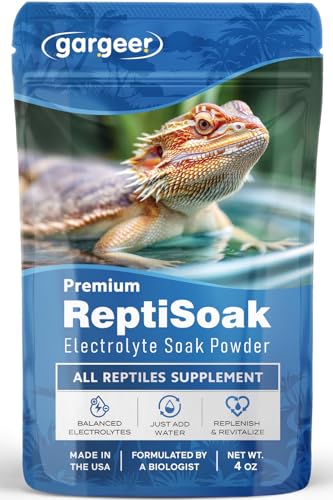
Replenish & Rehydrate: Helps restore hydration, energy, and balance for reptiles during stress, illness, or egg-laying.

Energy & Vitality Support: Glucose provides quick energy replenishment, while vitamin B complex support energy metabolism, helping maintain daily vitality. Ideal reptile vitamins & electrolyte for adding in reptile & tortoise like bearded dragon pool

Fun and Comfortable Bathing Experience: This mini bathing tub is designed specifically for small reptiles, providing a comfortable space for soaking and gentle water play. Its playful tub shape encourages natural behaviors like cooling off and water relaxation