
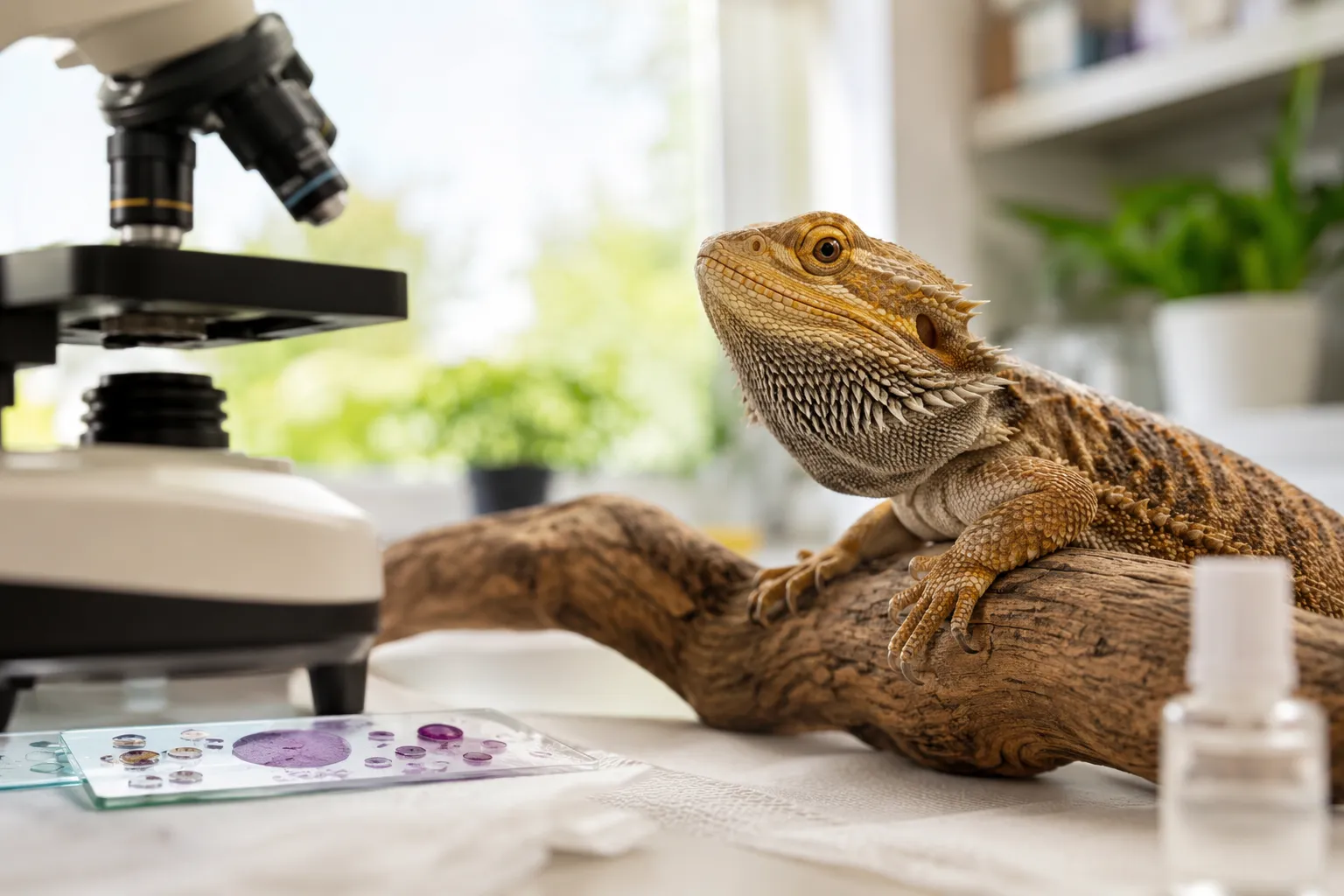
Quick Answer: Bearded dragon parasites vary widely in appearance depending on the type. Pinworms look like tiny white or cream-colored threads (1-5mm long) visible in fresh feces, while coccidia are microscopic and invisible to the naked eye. External parasites like mites appear as tiny black, red, or gray dots that move on the skin, particularly around the eyes, ears, and skin folds. Most internal parasites require fecal testing under a microscope for accurate identification.
Key Takeaways
- Pinworms are the most commonly visible parasite, appearing as small white threads in bearded dragon feces
- Coccidia cannot be seen without a microscope and require professional fecal testing for diagnosis
- Mites look like tiny moving dots (0.5-1mm) on the skin, often black or reddish-brown in color
- Most bearded dragons carry low levels of parasites without showing symptoms; problems arise when parasite loads become excessive
- Fecal testing at a reptile veterinarian typically costs $25-$75 and is the only reliable way to identify most internal parasites
- Visible worms in feces always warrant veterinary attention, even if your dragon appears healthy
- Never use over-the-counter parasite treatments without veterinary guidance, as incorrect dosing can be fatal
- Symptoms like weight loss, lethargy, and loss of appetite often appear before parasites become visible

Includes most essentials needed for a bearded dragon habitat

🌈【COMPLETE 10PCS REPTILE ACCESSORIES KIT】: All-in-one tank accessory set designed for bearded dragons and other reptiles, covering feeding, grooming, bathing, shedding support, and tank cleaning.

Comprehensive Starter Set: This gecko tank accessories kit includes 20 essential accessories, providing everything you need to set up a reptile terrarium, including artificial plants, hiding places for pets, pet toys, temperature and humidity monitoring equipment, food dishes, and feeding tools
What Are the Most Common Parasites in Bearded Dragons?
The three most common parasites affecting bearded dragons are pinworms (Oxyuridae), coccidia (Isospora species), and external mites. Pinworms are intestinal nematodes that appear as small white threads in feces, coccidia are single-celled protozoan parasites visible only under microscopy, and mites are external parasites that feed on blood and skin.
Pinworms (Oxyuridae) are the most frequently encountered internal parasite. They live in the intestinal tract and reproduce rapidly when conditions favor them. Most captive bearded dragons carry some pinworms without issue, but stress, poor husbandry, or weakened immune systems can cause populations to explode.
Coccidia are microscopic parasites that damage the intestinal lining. They’re particularly dangerous to young or stressed dragons and can cause severe diarrhea, dehydration, and death if untreated. Unlike pinworms, you’ll never see coccidia with your naked eye.
Mites are the most common external parasite. These tiny arachnids crawl on the skin, hide in scales, and feed on blood. They’re often introduced through contaminated substrate, decorations, or contact with infected reptiles.
Other less common parasites include:
- Hookworms – intestinal parasites that attach to the gut wall
- Roundworms – larger nematodes occasionally found in wild-caught dragons
- Flagellates – microscopic protozoan parasites
- Tapeworms – rare in captive dragons but possible
Common mistake: Assuming a dragon is parasite-free because you don’t see anything in the feces. Many dangerous parasites are microscopic and require professional testing to detect.
How to Identify Pinworms in Bearded Dragon Poop
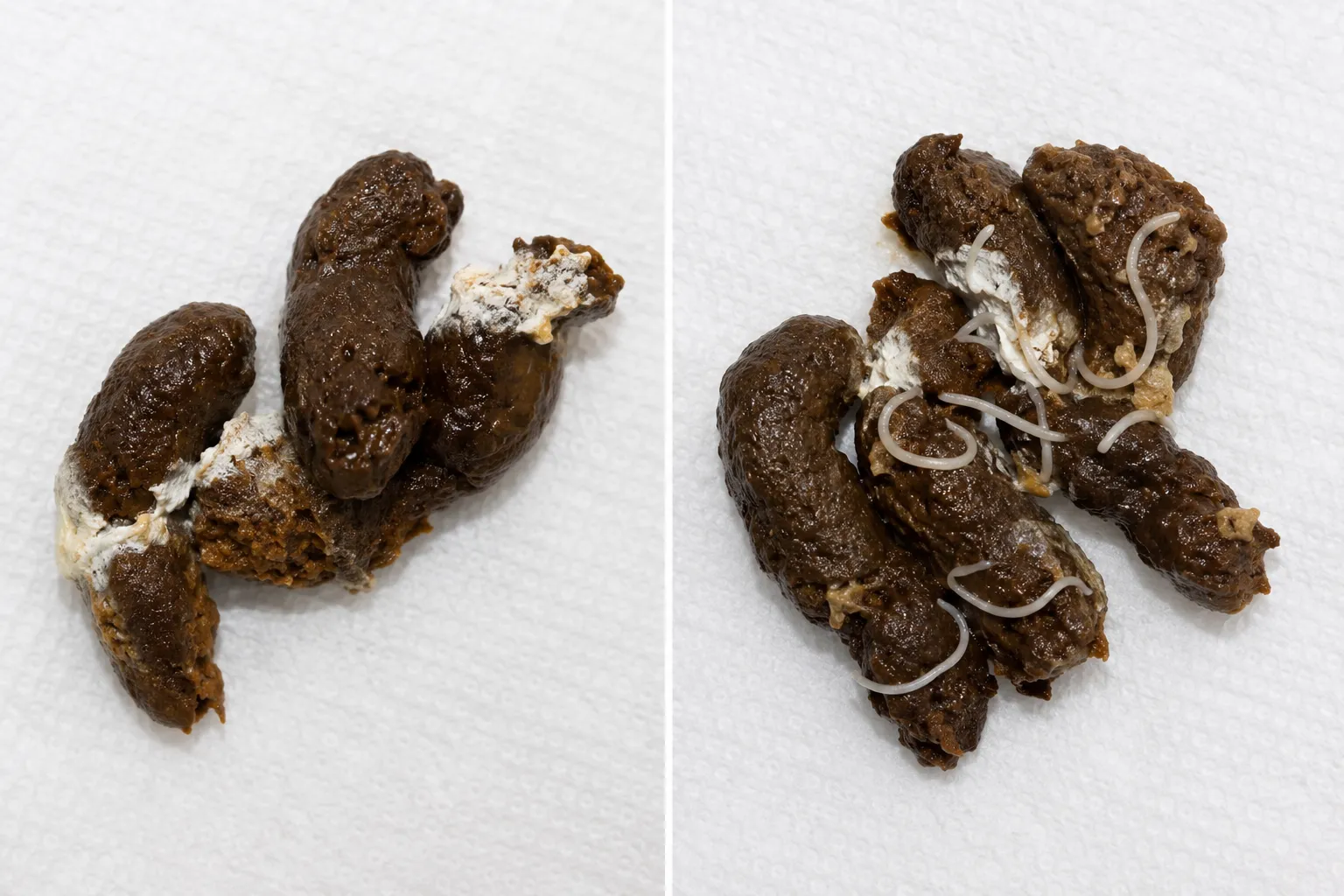
Pinworms in bearded dragon feces appear as tiny white, cream, or pale yellow threadlike structures, typically 1-5mm in length, that may be moving or stationary. They’re most visible in fresh feces and become harder to spot as the feces dries out.
What to look for when examining feces:
- Thin white threads that resemble tiny pieces of cotton or dental floss
- Movement – live pinworms may wiggle slowly in fresh feces
- Location – often found on the surface or edges of the fecal matter
- Consistency – they maintain their shape and don’t dissolve when touched with a toothpick
- Size variation – adult pinworms are longer (3-5mm) while juveniles are barely visible (1-2mm)
Best practices for identification:
- Examine feces within 30 minutes of defecation while still fresh
- Use bright natural light or a flashlight for better visibility
- Place feces on a white paper towel or plate for contrast
- Use a magnifying glass for closer inspection
- Look for movement, which confirms live parasites
Choose pinworm identification if: You see distinct threadlike structures that maintain their shape. Choose veterinary testing if you’re unsure, as shed intestinal lining, undigested plant fibers, or substrate particles can sometimes mimic pinworms.
Maintaining proper bearded dragon care practices, including regular health monitoring, helps catch parasite issues early.
Bearded Dragon Coccidia vs Pinworms: What’s the Difference?
Coccidia and pinworms differ fundamentally in size, visibility, and health impact. Coccidia are microscopic single-celled protozoan parasites (Isospora amphiboluri) that cannot be seen without a microscope, while pinworms are visible nematode worms that can be spotted in feces with the naked eye.
Key differences:
| Feature | Coccidia | Pinworms |
|---|---|---|
| Visibility | Microscopic only | Visible to naked eye (1-5mm) |
| Appearance | Invisible; diagnosed via oocysts in fecal float | White threadlike worms in feces |
| Severity | Can be life-threatening, especially in juveniles | Usually manageable; rarely fatal |
| Symptoms | Severe watery diarrhea, rapid weight loss, lethargy | Often asymptomatic; mild diarrhea when severe |
| Diagnosis | Requires fecal flotation test at vet | Can be seen in fresh feces |
| Treatment | Ponazuril or sulfadimethoxine (prescription) | Fenbendazole or panacur (prescription) |
| Transmission | Fecal-oral route; highly contagious | Fecal-oral route; moderate contagion |
Coccidia warning signs:
- Watery, foul-smelling diarrhea (often with mucus or blood)
- Rapid weight loss despite normal appetite
- Extreme lethargy and weakness
- Dehydration (sunken eyes, wrinkled skin)
Pinworm warning signs:
- Visible worms in feces
- Mild diarrhea or soft stools
- Gradual weight loss over weeks
- Reduced appetite
Critical distinction: Coccidia is a medical emergency requiring immediate veterinary care, especially in dragons under one year old. Pinworms, while requiring treatment, rarely cause acute life-threatening illness.
Can You See Bearded Dragon Parasites with the Naked Eye?
You can see some bearded dragon parasites with the naked eye, but not all. External parasites like mites and internal parasites like pinworms are visible without magnification, while coccidia, flagellates, and most other protozoan parasites require microscopic examination.
Visible parasites:
- Pinworms – appear as white threads in feces (1-5mm)
- Mites – tiny black, red, or gray dots on skin (0.5-1mm)
- Roundworms – occasionally visible as larger worms in feces (rare in captive dragons)
- Tapeworm segments – rice-like segments in feces (very rare)
Invisible parasites (require microscopy):
- Coccidia – single-celled protozoa
- Flagellates – microscopic parasites
- Hookworm eggs – eggs too small to see
- Pinworm eggs – eggs invisible without microscope (though adult worms are visible)
Practical identification tips:
For mites, inspect your dragon in bright light:
- Check around the eyes, ears, and vent
- Look in skin folds and under scales
- Place your dragon on a white paper towel and watch for tiny moving dots
- Check after baths, as mites often congregate around water
For pinworms, examine fresh feces:
- Use natural daylight or a bright flashlight
- Place feces on white paper for contrast
- Look within 30 minutes of defecation
- Use a magnifying glass if available
Important limitation: Even if you don’t see parasites, your dragon may still be infected. Many parasites exist in egg or microscopic form, making professional fecal testing the only reliable diagnostic method.
Symptoms of Parasites in Bearded Dragons Besides Visible Worms
Bearded dragons with parasite infections often show behavioral and physical symptoms long before parasites become visible in feces. Common signs include weight loss despite normal eating, lethargy, loss of appetite, abnormal feces (diarrhea or mucus), and behavioral changes like increased hiding or reduced activity.
Early warning signs:
- Weight loss – gradual decline over weeks, visible hip bones and thin tail base
- Lethargy – spending more time sleeping, reluctance to move
- Appetite changes – refusing favorite foods, eating less than usual
- Behavioral shifts – increased hiding, less basking, reduced interaction
Digestive symptoms:
- Diarrhea – watery, runny, or unusually soft stools
- Mucus in feces – slimy coating or strands
- Foul odor – stronger than normal smell
- Undigested food – whole insects or vegetables in feces
- Straining to defecate – prolonged attempts or visible discomfort
- Irregular bowel movements – more or less frequent than normal
Physical symptoms:
- Dehydration – sunken eyes, wrinkled skin, skin tenting
- Bloating – swollen abdomen
- Pale coloration – washed-out or dull colors
- Rough scales – poor shed quality
Behavioral red flags:
- Glass surfing – frantic scratching at tank walls (though this has multiple causes)
- Excessive sleeping – more than normal brumation patterns (learn more about bearded dragon sleep patterns)
- Aggression or irritability – unusual defensive behavior
- Weakness – difficulty climbing or moving
Choose immediate veterinary care if: Your dragon shows multiple symptoms simultaneously, refuses food for more than 3-4 days, has bloody diarrhea, or displays extreme lethargy. These indicate potentially severe parasite loads or secondary complications.
How Much Does a Bearded Dragon Fecal Test Cost at the Vet?
A bearded dragon fecal parasite test typically costs between $25 and $75 at most reptile veterinarians, with the exact price varying by location, clinic type, and test complexity. This usually includes a fecal flotation test to detect parasite eggs and a direct smear to identify protozoan parasites.
Cost breakdown by test type:
- Basic fecal flotation – $25-$40 (detects most worm eggs)
- Fecal direct smear – $15-$30 (detects protozoa like coccidia)
- Combined fecal exam – $40-$75 (flotation + direct smear)
- Fecal culture – $75-$150 (rarely needed; identifies bacteria)
- PCR testing – $100-$200 (specialized; rarely required)
Additional costs to consider:
- Office visit/exam fee – $50-$100 (often required for first-time patients)
- Follow-up testing – $25-$75 (recommended 2-4 weeks after treatment)
- Medication – $15-$60 depending on parasite type and dragon size
What’s included in a standard fecal test:
- Fecal flotation – sample mixed with solution that causes parasite eggs to float for microscopic examination
- Direct smear – fresh sample examined immediately under microscope for moving parasites
- Veterinary interpretation – professional analysis and treatment recommendations
- Written results – documentation of findings
Money-saving tips:
- Call multiple reptile vets to compare pricing
- Ask if the exam fee can be waived for fecal-only visits
- Some clinics offer wellness packages that include annual fecal testing
- Bring a fresh sample (collected within 2-4 hours) to avoid collection fees
When to test:
- Annually as part of routine wellness care
- When adopting a new dragon (quarantine testing)
- If symptoms appear (diarrhea, weight loss, lethargy)
- After exposure to other reptiles
- Before breeding
Choose professional testing over home identification because: Microscopic parasites like coccidia cause the most serious health problems but are completely invisible without proper equipment and training.
Do All Bearded Dragons Have Parasites or Just Sick Ones?
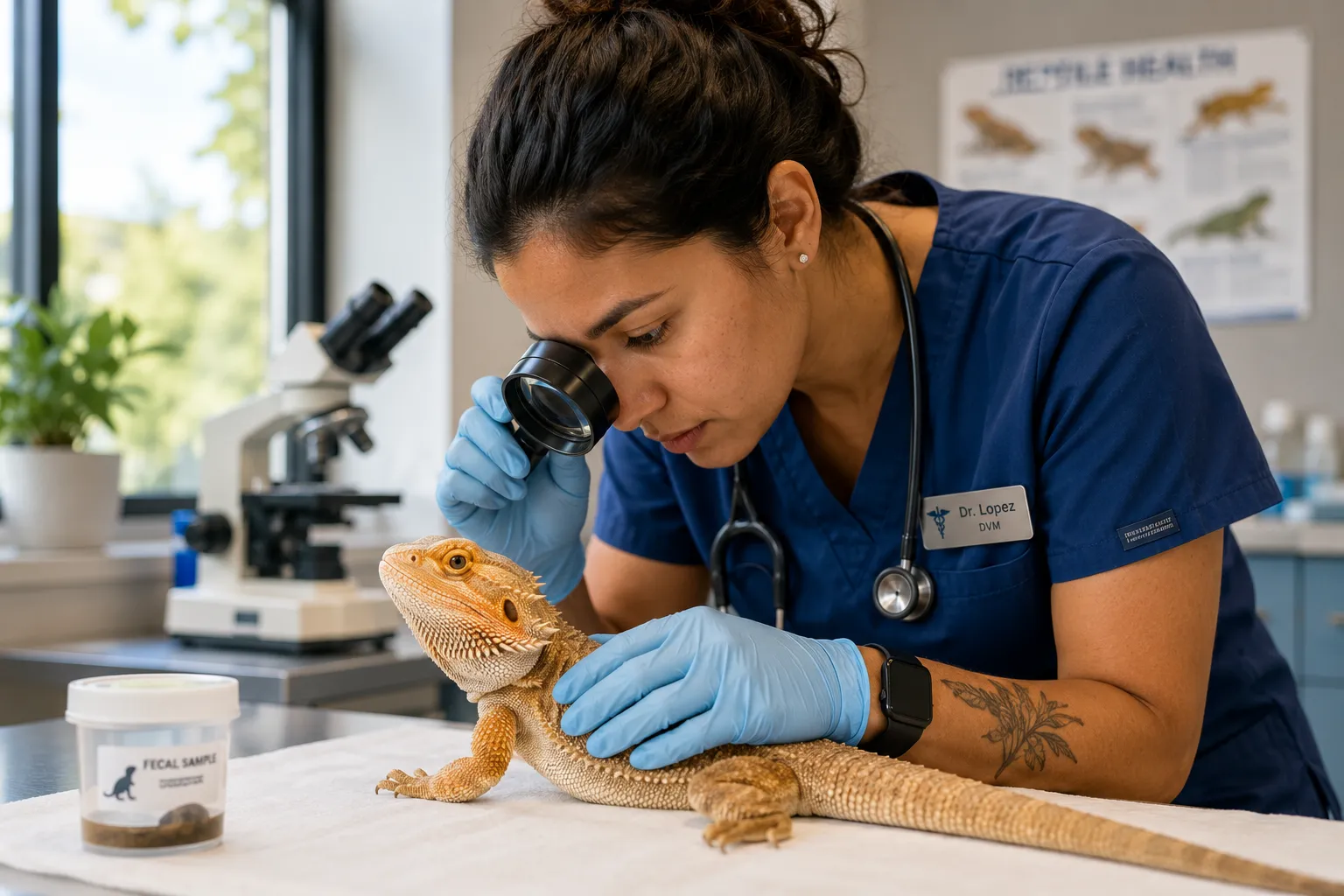
Most bearded dragons carry some level of parasites, even when healthy. The key difference between healthy and sick dragons isn’t the presence of parasites but the parasite load (quantity). Low numbers of certain parasites like pinworms are considered normal and don’t cause illness, while high parasite loads overwhelm the immune system and cause disease.
The parasite load concept:
Reptile veterinarians distinguish between:
- Normal/low load – small numbers of parasites that don’t affect health
- Moderate load – increasing numbers that may cause mild symptoms
- Heavy load – overwhelming numbers causing significant illness
Why healthy dragons tolerate parasites:
- Strong immune system – keeps parasite populations in check
- Optimal husbandry – proper temperature, lighting, and tank size support immune function
- Good nutrition – balanced diet with proper supplementation maintains health
- Low stress – stable environment prevents immune suppression
Factors that cause parasite overgrowth:
- Stress – moves, new environments, improper handling
- Poor husbandry – incorrect temperatures, inadequate UVB, dirty enclosure
- Malnutrition – improper diet lacking variety or supplements
- Overcrowding – multiple dragons in one enclosure
- Illness or injury – weakened immune system
- Age – juveniles and elderly dragons more susceptible
Wild-caught vs. captive-bred:
- Wild-caught dragons – typically carry heavier parasite loads and more parasite species
- Captive-bred dragons – usually have fewer parasites, primarily pinworms from parent transmission
When to treat parasites:
Veterinarians typically recommend treatment when:
- Parasite eggs are abundant in fecal tests (high counts)
- Clinical symptoms appear (weight loss, diarrhea)
- Coccidia is detected (always treated due to severity)
- Before breeding (to prevent transmission to offspring)
- During quarantine of new dragons
Common misconception: “Parasite-free” dragons are rare and often unnecessary. The goal is maintaining parasite loads at levels that don’t compromise health, not complete elimination.
What Do Bearded Dragon Mites Look Like on Their Skin?
Bearded dragon mites appear as tiny dots ranging from 0.5mm to 1mm in size, colored black, dark red, reddish-brown, or gray depending on whether they’ve recently fed on blood. They look like moving specks of pepper or tiny spiders and are most commonly found around the eyes, ears, skin folds, and vent area.
Visual identification characteristics:
- Size – barely visible to naked eye, about the size of a period (.)
- Color – black when unfed, red or reddish-brown when engorged with blood
- Movement – crawl slowly across skin and scales
- Shape – round or oval body with tiny legs (8 legs, as they’re arachnids)
- Clustering – often group in warm, moist areas
Where to look for mites:
- Around the eyes – in the creases and under eye scales
- Ear openings – inside and around the ear holes
- Vent area – around the cloaca
- Skin folds – armpits, neck folds, between scales
- Under scales – lift scales gently to check underneath
- After soaking – mites often emerge and cluster on the head during baths
Detection methods:
- White paper towel test – handle your dragon over white paper and watch for tiny moving dots that fall off
- Water test – during baths, mites float to the water surface or cluster on the dragon’s head
- Magnifying glass – use magnification for clearer viewing
- Bright light inspection – examine in strong natural light or with a flashlight
Mite vs. normal skin features:
- Mites move – they crawl and change position
- Dirt doesn’t move – substrate particles stay stationary
- Scale pigmentation – natural dark spots on scales don’t move or change location
- Mites are uniform – similar size and shape, while dirt varies
Signs of mite infestation beyond visual identification:
- Small white or gray dots (mite feces) on dragon or in tank
- Tiny red or brown smears (crushed mites) on handling surfaces
- Dragon scratching or rubbing against objects
- Restlessness, especially at night when mites are most active
- Pale skin or anemia from blood loss (severe infestations)
Immediate action if mites are found:
- Isolate the infected dragon from other reptiles
- Remove all substrate, decorations, and porous items from the tank
- Deep clean and disinfect the entire enclosure
- Consult a reptile veterinarian for treatment options
- Treat the environment, not just the dragon
Prevention tip: Quarantine all new dragons, decorations, and plants for 30-60 days before introducing them to your main setup. Mites are almost always introduced from external sources.

Vitamin Enriched Formula That Provides Essential Proteins, Fats, Vitamins And Minerals

HUNTING DRAGON: We all know some bearded dragons may be picky, and will need some encouragement getting used to a brand-new food. Let's patiently help them fall in love with Gargeer gels! We advise starting with a solid stripe you'll hand feed, using tongs/tweezers, an action that triggers their hunting instinct. A healthy fun for all parties involved

SILVER SOLUTION FOR REPTILES – Safe formula! Natural product with no GMOs and colorants! From geckos to iguanas, this Wound Spray is designed for reptiles of all sizes and ages.
How to Collect Bearded Dragon Poop Sample for Parasite Testing
To collect a bearded dragon fecal sample for parasite testing, gather fresh feces within 2-4 hours of defecation using a clean plastic spoon or popsicle stick, place it in a sealed plastic bag or container, label it with your name and date, and refrigerate it until your veterinary appointment (ideally within 24 hours).
Step-by-step collection process:
Prepare collection materials:
- Clean plastic bag (sandwich or snack size) or small plastic container with lid
- Disposable plastic spoon, popsicle stick, or gloves
- Permanent marker for labeling
- Paper towel
Wait for fresh defecation:
- Check your dragon’s enclosure multiple times daily
- Morning is often when dragons defecate
- Warm baths can stimulate bowel movements if needed
Collect the sample:
- Use the spoon or stick to pick up the entire fecal portion (not just urates)
- Collect at least a grape-sized amount (about 1-2 grams)
- Include any visible worms or abnormal material
- Avoid contamination with substrate or urates when possible
Store properly:
- Place sample in plastic bag and seal tightly, or use a container with secure lid
- Label with your name, dragon’s name, and collection date/time
- Refrigerate immediately (do NOT freeze)
- Keep refrigerated until vet appointment
Timing considerations:
- Ideal – collected within 2 hours, tested within 24 hours
- Acceptable – collected within 4 hours, tested within 48 hours
- Not recommended – samples older than 48 hours (parasite eggs may deteriorate)
What if your dragon won’t defecate before the appointment?
- Give a warm bath (85-90°F) for 15-20 minutes
- Gently massage the belly
- Increase activity and handling
- Ensure proper basking temperatures
- Schedule the appointment for afternoon (more time for morning defecation)
- Ask your vet if you can drop off a sample later the same day
Sample quality tips:
- Fresh is best – parasites and eggs are most detectable in fresh samples
- Avoid dried feces – moisture loss affects test accuracy
- Don’t add water – keep the sample as-is
- Separate from urates – white urate portion isn’t needed for parasite testing
- Collect enough – vets need adequate material for multiple test types
What the vet needs to know:
- When the sample was collected
- Any symptoms your dragon is showing
- Recent diet changes
- Exposure to other reptiles
- Previous parasite treatments
Cost-saving tip: Call ahead to confirm your vet accepts dropped-off samples. Some clinics allow you to drop off a fresh sample without an exam fee, reducing the total cost of testing.
Can Bearded Dragon Parasites Spread to Humans?
Most bearded dragon parasites are species-specific and cannot infect humans, but a few parasites can potentially cause zoonotic infections (diseases transmitted from animals to humans). The most concerning is Salmonella bacteria, though technically not a parasite, while some pinworm species and Cryptosporidium can rarely affect immunocompromised individuals.
Parasites that generally do NOT spread to humans:
- Bearded dragon pinworms (Oxyuridae) – species-specific, cannot complete life cycle in humans
- Coccidia (Isospora amphiboluri) – reptile-specific species
- Bearded dragon mites – prefer reptile hosts, may bite humans but cannot establish infestation
- Most nematodes – adapted to reptile physiology
Potential zoonotic concerns:
- Salmonella (bacteria, not parasite) – most significant risk; causes gastroenteritis in humans
- Cryptosporidium – rare protozoan that can cause diarrhea in immunocompromised people
- Entamoeba – rare amoeba that may occasionally affect humans
Who is most at risk:
- Young children under 5 years old
- Pregnant women
- Elderly individuals
- People with compromised immune systems (HIV/AIDS, chemotherapy patients, organ transplant recipients)
- People with chronic illnesses
Prevention and hygiene practices:
Always wash hands thoroughly with soap and water after:
- Handling your bearded dragon
- Cleaning the enclosure
- Touching tank decorations or substrate
- Collecting fecal samples
Designate reptile-only equipment:
- Don’t use kitchen sinks or food-prep areas for tank cleaning
- Keep separate cleaning supplies for reptile care
- Use disposable gloves when handling feces
Supervise children:
- Teach proper hand-washing
- Don’t allow dragons in bedrooms or on beds
- Supervise all interactions
- No kissing or face-to-face contact
Maintain enclosure hygiene:
- Remove feces daily
- Deep clean weekly
- Disinfect surfaces regularly
- Wash hands after any tank maintenance
Realistic risk assessment:
The actual risk of contracting parasites from bearded dragons is very low with proper hygiene. Salmonella is the primary concern, and it’s easily prevented through consistent hand-washing. Parasite transmission is extremely rare and almost exclusively limited to immunocompromised individuals.
When to consult a doctor:
If you develop gastrointestinal symptoms (diarrhea, cramping, nausea) after handling your dragon or cleaning their enclosure, inform your doctor about your reptile exposure. This is especially important for high-risk individuals.
Maintaining good bearded dragon care practices protects both your pet’s health and your own.
Over the Counter Parasite Treatment for Bearded Dragons
There are no safe or effective over-the-counter parasite treatments recommended for bearded dragons. All antiparasitic medications require precise dosing based on the dragon’s weight, parasite type, and health status, making veterinary prescription essential. Using OTC products designed for other animals can be fatal to bearded dragons.
Why OTC treatments are dangerous:
- Incorrect dosing – reptile metabolism differs drastically from mammals; dog/cat doses are toxic
- Wrong medication – different parasites require specific drugs
- Misdiagnosis – treating the wrong parasite wastes time and allows the real problem to worsen
- Organ damage – many OTC dewormers cause liver or kidney damage in reptiles
- Death – overdose or inappropriate medication can be fatal
Commonly misused OTC products (DO NOT USE):
- Dog/cat dewormers – toxic to reptiles at any dose
- Ivermectin (horse paste) – dangerous; can cause neurological damage
- Praziquantel (fish medication) – requires precise dosing; wrong concentration is harmful
- Diatomaceous earth – ineffective against internal parasites; can cause respiratory issues
- Herbal remedies – unproven, potentially toxic
Prescription medications that work (veterinary-only):
- Fenbendazole (Panacur) – for pinworms and roundworms
- Ponazuril – for coccidia
- Metronidazole – for flagellates and some protozoa
- Sulfadimethoxine – for coccidia
Why veterinary care is essential:
- Accurate diagnosis – fecal testing identifies the specific parasite
- Proper dosing – calculated based on exact body weight
- Monitoring – follow-up tests ensure treatment success
- Safety – vets can manage side effects or complications
- Treatment plan – includes environmental cleaning and prevention
What you CAN do at home:
- Improve husbandry – optimize temperatures, lighting, and tank setup
- Deep clean enclosure – remove all substrate, disinfect surfaces
- Quarantine – separate infected dragons from others
- Boost nutrition – offer varied, nutritious foods like hornworms and appropriate vegetables
- Reduce stress – minimize handling during illness
- Collect fecal samples – for veterinary testing
Cost perspective:
While veterinary care costs $100-$200 for diagnosis and treatment, attempting OTC treatment often results in:
- Worsening condition requiring emergency care ($300-$500+)
- Prolonged illness and suffering
- Potential death and loss of your pet
Emergency situations requiring immediate vet care:
- Bloody diarrhea
- Complete loss of appetite for more than 4 days
- Severe lethargy or weakness
- Rapid weight loss
- Dehydration
The bottom line: Parasite treatment is not a DIY project. The small cost of veterinary care is worth your dragon’s life and long-term health.
Mistaking Shed Skin for Parasites in Bearded Dragon
Shed skin is commonly mistaken for parasites in bearded dragons, particularly when small pieces of white or translucent shed appear in feces or stick to the skin. Unlike parasites, shed skin is flat, papery, and doesn’t move, while pinworms are cylindrical, thread-like, and may wiggle in fresh feces.
How to distinguish shed skin from parasites:
| Feature | Shed Skin | Pinworms |
|---|---|---|
| Texture | Flat, papery, translucent | Cylindrical, thread-like, solid |
| Movement | Never moves | May wiggle in fresh feces |
| Color | White, gray, or translucent | White, cream, or pale yellow |
| Shape | Irregular pieces, flakes | Uniform threads, consistent width |
| Location | On skin, in feces, around tank | Only in feces |
| Response to touch | Crumbles, tears easily | Maintains shape, feels firm |
Common shed-related false alarms:
Shed pieces in feces:
- Dragons sometimes ingest small amounts of shed skin during the shedding process
- These appear as white flakes or irregular pieces mixed with feces
- Unlike worms, they’re flat and don’t have consistent shape
Stuck shed around vent:
- White or gray skin around the cloaca can look like emerging worms
- Shed skin is attached and doesn’t move independently
- It peels away in sheets, not individual threads
Shed in water bowl:
- Dragons often soak during shedding, leaving skin in water
- Floating shed can look concerning but is normal
- Shed skin becomes translucent and slimy when wet
Testing if it’s shed or parasites:
- Touch test – gently touch with a toothpick; shed crumbles, worms maintain shape
- Movement test – watch for 2-3 minutes; parasites may move, shed never does
- Texture test – shed is flat and papery, worms are round and firm
- Pattern test – shed appears during shedding cycles, parasites appear randomly
When shedding is normal:
- Juveniles shed every 4-6 weeks
- Adults shed every 6-12 weeks
- Increased shedding during growth spurts
- Patchy shedding is normal (not all at once)
Actual shedding problems to watch for:
- Stuck shed on toes, tail tip, or around eyes (can cause circulation problems)
- Retained shed after 2+ weeks
- Incomplete sheds repeatedly
- Dull, patchy skin between sheds
Supporting healthy sheds:
- Maintain proper humidity (30-40% normally, 50-60% during shedding)
- Provide rough surfaces for rubbing
- Offer warm baths during shedding
- Ensure adequate hydration
- Never pull shed skin off manually
When to worry:
If you see white threads that maintain their shape, appear consistently in multiple bowel movements, or show any movement, collect a sample and have it tested by a veterinarian. It’s better to check and confirm it’s shed than to miss a parasite infection.
How Long Can Bearded Dragons Survive with Untreated Parasites?
Bearded dragons can survive with low-level parasite infections for months or even years without treatment, but heavy parasite loads can cause death within weeks to months depending on the parasite type, the dragon’s age, and overall health. Coccidia infections are most dangerous and can be fatal within 1-3 weeks in young dragons, while pinworm infections typically cause gradual decline over months.
Survival timeline by parasite type:
Coccidia (most dangerous):
- Juveniles – can die within 1-3 weeks without treatment
- Adults – may survive 1-3 months but with severe health decline
- Risk factors – rapid dehydration, intestinal damage, secondary infections
Pinworms (moderate concern):
- Light infections – dragons can live normal lifespans with minimal impact
- Heavy infections – gradual decline over 3-6 months
- Complications – malnutrition, weight loss, weakened immune system
Mites (external):
- Light infestations – can persist indefinitely with mild irritation
- Heavy infestations – cause anemia and death within 2-4 months
- Risk factors – blood loss, stress, secondary skin infections
Factors affecting survival:
Age:
- Juveniles – more vulnerable; parasites can be fatal within weeks
- Adults – stronger immune systems; can tolerate longer
- Elderly – weakened systems; faster decline than healthy adults
Parasite load:
- Low – minimal impact, years of survival
- Moderate – months of gradual decline
- Heavy – weeks to months before critical condition
Overall health:
- Strong immune system – keeps parasites in check longer
- Compromised health – parasites worsen quickly
- Concurrent illness – dramatically shortens survival time
Husbandry quality:
- Optimal conditions – support immune function, extend survival
- Poor conditions – accelerate parasite multiplication and health decline
- Proper tank size and setup support recovery
Warning signs of critical parasite load:
- Severe weight loss – visible bones, thin tail base
- Complete appetite loss – refusing all food for 5+ days
- Extreme lethargy – barely moving, eyes closed constantly
- Dehydration – sunken eyes, skin tenting
- Bloody diarrhea – indicates severe intestinal damage
Quality of life considerations:
Even if a dragon survives with parasites, untreated infections cause:
- Chronic discomfort and pain
- Reduced activity and enjoyment
- Shortened overall lifespan
- Increased susceptibility to other diseases
- Poor quality of life
The cost of waiting:
Delaying treatment often results in:
- More expensive emergency care later
- Longer treatment duration
- Permanent organ damage
- Reduced chance of full recovery
- Potential death
Realistic prognosis with treatment:
- Early treatment – excellent prognosis, full recovery expected
- Moderate infections – good prognosis with proper medication
- Severe infections – guarded prognosis, possible permanent damage
- Critical cases – poor prognosis, may not survive despite treatment
The bottom line: While dragons can technically survive with parasites for extended periods, survival doesn’t equal quality of life. Early treatment prevents suffering, complications, and death while being far less expensive than emergency care.
Pictures of Healthy Bearded Dragon Poop vs Parasites
Healthy bearded dragon feces are brown, firm, and well-formed with a white or cream-colored urate portion, while feces containing parasites may show visible white threads (pinworms), be watery or mucus-covered (coccidia), or appear otherwise abnormal. Visual comparison is helpful, but microscopic examination is the only definitive diagnostic method.
Healthy bearded dragon feces characteristics:
- Color – medium to dark brown (varies with diet)
- Consistency – firm but not hard, holds shape
- Form – log-shaped, distinct from urates
- Urates – white or cream-colored, chalky or paste-like
- Odor – mild, earthy smell (not foul)
- Frequency – juveniles daily, adults every 1-3 days
Visual signs of parasites in feces:
Pinworms:
- Small white threads (1-5mm) visible on surface or throughout feces
- May be moving in fresh samples
- Appear like tiny pieces of white cotton or thread
- More visible on dark-colored feces
Coccidia (indirect signs, parasites not visible):
- Watery, loose, or liquid consistency
- Mucus coating or strands
- Foul, strong odor
- May contain blood or appear dark/tarry
- Urates may be yellow or green (indicating dehydration)
Other parasite indicators:
- Excessive mucus
- Undigested food (whole insects or vegetables)
- Unusual colors (black, red, green)
- Foul smell stronger than normal
Normal variations that aren’t parasites:
- Substrate particles – sand, soil, or bedding mixed in feces (indicates ingestion)
- Undigested plant matter – vegetable pieces (may indicate improper temperatures)
- Shed skin pieces – white flakes that are flat and papery
- Urate variations – yellow or orange urates (mild dehydration, not parasites)
Diet-related feces changes (normal):
- Dark feces – after eating blueberries or dark greens
- Red-tinged – after eating bell peppers or tomatoes
- Green feces – after eating lots of greens
- Soft feces – after eating watery fruits like watermelon
When to photograph feces for your vet:
- Place feces on white paper towel or plate for contrast
- Use natural lighting or bright white light
- Take photos from multiple angles
- Include a size reference (coin or ruler)
- Photograph within 30 minutes of defecation
- Capture any visible worms or abnormalities
Limitations of visual diagnosis:
- Most parasites are microscopic and invisible
- Many health issues cause similar-looking feces
- Coccidia causes obvious symptoms but can’t be seen
- Single normal-looking sample doesn’t rule out parasites
Professional testing remains essential:
Even with visual guides, fecal testing is the only reliable diagnostic method. Veterinarians use:
- Fecal flotation – detects parasite eggs
- Direct smear – identifies moving protozoa
- Microscopic examination – confirms parasite species
- Quantification – determines parasite load severity
Documentation tips:
Keep a log of your dragon’s bowel movements:
- Date and time
- Appearance and consistency
- Any visible abnormalities
- Recent diet
- Behavioral changes
This information helps veterinarians diagnose problems and track treatment progress.
Frequently Asked Questions
Can baby bearded dragons have parasites?
Yes, baby bearded dragons can have parasites, often transmitted from parent dragons through eggs or early contact. Juvenile dragons are more vulnerable to parasite-related illness than adults because their immune systems are still developing. Coccidia is particularly dangerous in babies and can be fatal within 1-3 weeks if untreated.
How often should I test my bearded dragon for parasites?
Test your bearded dragon for parasites annually as part of routine wellness care, immediately after adoption or purchase, whenever symptoms appear (diarrhea, weight loss, lethargy), after exposure to other reptiles, and before breeding. Dragons with previous parasite infections should be retested 2-4 weeks after treatment completion.
Can parasites cause bearded dragons to stop eating?
Yes, heavy parasite loads can cause bearded dragons to lose their appetite and stop eating. Parasites cause intestinal discomfort, nausea, and malnutrition that reduce appetite. However, many other factors also cause appetite loss, so parasites should be confirmed through fecal testing rather than assumed based on symptoms alone.
Are bearded dragon parasites contagious to other reptiles?
Yes, most bearded dragon parasites can spread to other reptiles through fecal-oral transmission. Parasites are transmitted when one reptile comes into contact with contaminated feces, substrate, water, or surfaces. Always quarantine new reptiles for 30-60 days and maintain separate enclosures for dragons with confirmed parasite infections.
What kills bearded dragon mites instantly?
No safe product kills bearded dragon mites instantly, but veterinary-prescribed treatments like diluted betadine soaks, reptile-safe mite sprays, or ivermectin (under veterinary supervision only) effectively eliminate mites within days to weeks. Treatment must include both the dragon and complete enclosure disinfection, as mites live in the environment and will reinfest if not thoroughly eliminated.
Can I use hydrogen peroxide to clean my bearded dragon’s tank after parasites?
Hydrogen peroxide can be used to disinfect a bearded dragon tank after parasite treatment, but a 10% bleach solution (1 part bleach to 9 parts water) is more effective against parasite eggs. After cleaning with either solution, rinse all surfaces thoroughly with water multiple times and allow complete drying before returning your dragon to the enclosure.
Do parasites cause bearded dragons to be aggressive?
Parasites can indirectly cause increased irritability or defensive behavior in bearded dragons due to discomfort, pain, and illness. However, aggression has many causes including improper handling, territorial behavior, breeding season, and stress. If your dragon shows sudden behavioral changes along with physical symptoms, parasite testing is recommended.
How long after treatment will I stop seeing pinworms in feces?
You should stop seeing pinworms in feces within 7-14 days after starting treatment with fenbendazole or similar medication. However, some dead worms may continue to pass for a few days after treatment. Follow-up fecal testing 2-4 weeks after treatment completion confirms successful elimination.
Can bearded dragons get parasites from crickets or other feeder insects?
Yes, bearded dragons can contract parasites from feeder insects, particularly wild-caught insects or feeders from contaminated sources. Commercial feeder insects from reputable suppliers are generally parasite-free, but wild-caught insects like fireflies (which are toxic) or grasshoppers can carry parasites. Always source feeders from trusted suppliers.
What’s the difference between worms in poop and undigested food?
Worms in feces are distinct threadlike structures that maintain their shape and may move, while undigested food appears as recognizable pieces of insects or vegetables. Worms are uniform in appearance (consistent width and color), whereas undigested food varies in size and shape. When in doubt, collect a sample for veterinary examination.
Can stress cause parasites in bearded dragons?
Stress doesn’t cause parasites, but it weakens the immune system and allows existing low-level parasite populations to multiply rapidly. Stressors like improper temperatures, inadequate tank size, poor diet, or frequent handling can trigger parasite overgrowth in dragons that previously showed no symptoms.
Should I treat all my bearded dragons if one has parasites?
If one bearded dragon tests positive for parasites and shares space or equipment with others, all exposed dragons should be tested and potentially treated. However, don’t treat without testing, as unnecessary medication can harm healthy dragons. Quarantine the infected dragon and test all others before deciding on treatment.
Conclusion
Understanding what bearded dragon parasites look like is essential for every dragon owner, but visual identification has significant limitations. While pinworms appear as visible white threads in feces and mites look like tiny moving dots on skin, the most dangerous parasites like coccidia are completely invisible without microscopic examination.
The key takeaways for bearded dragon owners are straightforward: schedule annual fecal testing even when your dragon appears healthy, seek immediate veterinary care when symptoms appear, never attempt over-the-counter treatments, and maintain excellent husbandry practices to support your dragon’s immune system. Most dragons carry low levels of parasites without issue, but stress, poor care, or weakened immunity can quickly turn a manageable situation into a medical emergency.
Your action plan:
- Schedule annual wellness exams with fecal testing for all bearded dragons
- Monitor feces regularly for visible changes or abnormalities
- Maintain optimal husbandry including proper temperatures, lighting, and tank setup
- Quarantine new dragons for 30-60 days with parasite testing before introduction
- Seek veterinary care promptly when symptoms appear rather than waiting
- Practice good hygiene to protect both your dragon and your family
Remember that early detection and treatment of parasites dramatically improves outcomes and costs far less than emergency care for advanced infections. Your bearded dragon’s long-term health depends on proactive care, regular monitoring, and professional veterinary support when needed.

Fights Overgrowth: Herbal organic oregano oil drops cleanser to help detox cleanse overgrowth & extra support good flora balance complex; natural gut health oral tincture supplements for women & men

EXPERT FORMULATED: Developed by reptile nutritionists for optimal digestion and healthy growth.

Nature Zone Herp Pro Supplements for Bearded Dragons Powder Formula: Calcium/Probiotics