
Nearly 60% of new bearded dragon owners make critical setup errors in their first month that can lead to metabolic bone disease, respiratory infections, or chronic stress. These mistakes are preventable with the right information before bringing your dragon home.
Key Takeaways
- Tank size matters from day one: Adult bearded dragons need a minimum 75-gallon (120cm) tank, not the 40-gallon starter kits often sold in pet stores
- UVB lighting is non-negotiable: Without proper UVB exposure 10-12 hours daily, bearded dragons develop metabolic bone disease within months
- Temperature gradients are essential: Basking spots must reach 95-105°F (35-40°C) with a cool side at 75-85°F (24-29°C)
- Iceberg lettuce has zero nutritional value: Feed collard greens, mustard greens, and turnip greens instead
- Calcium supplementation prevents crippling bone disease: Dust insects with calcium powder 4-5 times weekly for juveniles, 2-3 times for adults
- Loose substrates cause impaction: Tile, reptile carpet, or paper towels are safer than sand or wood chips
- Feeding schedules change with age: Juveniles eat 80% insects daily; adults eat 80% vegetables with insects 3-4 times weekly
- Water dishes are necessary: Misting alone doesn’t provide adequate hydration

【Premium Reptile Habitat】Provide your reptiles with a secure and dependable home. Constructed from solid wood and coated with a thick water-resistant finish, this enclosure ensures a dry, stable environment that lasts. Designed specifically for terrestrial reptiles (not suitable for aquatic species), it offers a reliable space where your pets can thrive every day.Note: Items Inside of the cage are NOT included.
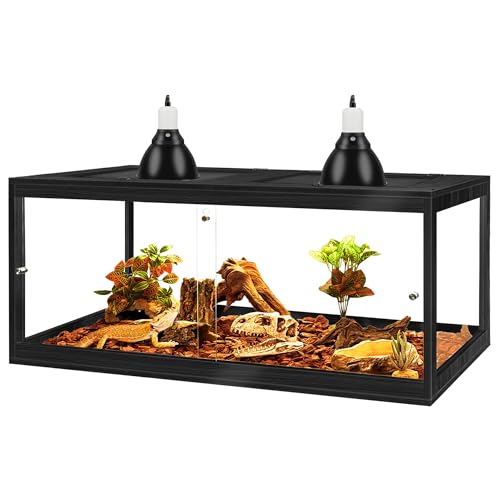
【Premium Wooden Reptile Habitat】Give your reptiles a safe and dependable home. Crafted from solid wood with a water-repellent polyester coating, this enclosure is built to last while maintaining a dry and stable environment. Specially designed for terrestrial reptiles (not for aquatic species), it provides a reliable space where your pet can thrive every day.
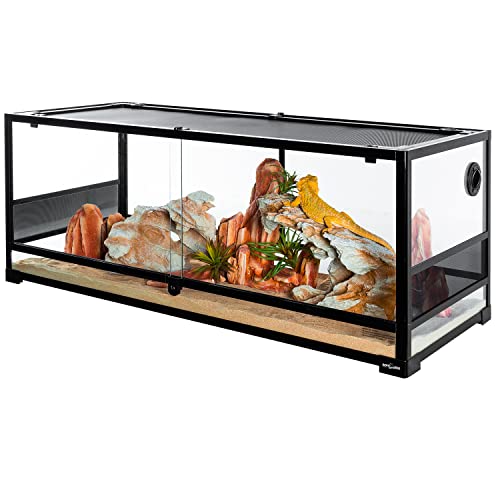
New Upgrade Tempered Glass: Tempered glass has characteristics of impact resistance, non-friability, and high-temperature resistance, making it safe to use.
What Are the Most Common Mistakes New Bearded Dragon Owners Make?
The most common bearded dragon care mistakes beginners make include inadequate tank size, improper lighting and heating, wrong substrate choices, poor diet composition, and skipping calcium supplementation. These errors often stem from misinformation at pet stores or outdated care guides that prioritize initial cost over long-term health.
The top mistakes that harm bearded dragons:
Buying too small a tank: Many beginners start with 40-gallon tanks marketed as “complete kits,” but adult bearded dragons need at least 75 gallons (48″ x 18″ x 18″). A cramped tank causes stress, limits natural behaviors, and makes it impossible to create proper temperature gradients.
Using compact UVB bulbs instead of tube lights: Compact coil UVB bulbs don’t provide adequate coverage across the tank. Tube-style UVB lights (T5 or T8) spanning 2/3 of the tank length are essential for vitamin D3 synthesis and calcium absorption.
Setting up uniform temperatures: Bearded dragons are ectothermic and need a temperature gradient to thermoregulate. Without distinct basking (95-105°F) and cool zones (75-85°F), they can’t properly digest food or regulate body temperature.
Feeding only crickets and lettuce: This nutritionally deficient diet leads to metabolic bone disease, vitamin deficiencies, and stunted growth. A proper diet includes varied insects (dubia roaches, black soldier fly larvae), dark leafy greens, and occasional vegetables.
Skipping calcium and vitamin supplements: Wild bearded dragons get calcium from whole prey and natural UVB exposure. Captive dragons need calcium powder dusted on insects and occasional vitamin D3 supplements to prevent metabolic bone disease.
Common mistake: Assuming pet store employees are reptile experts. Many chain stores provide outdated or incorrect care information to make sales. Always verify advice against current reptile care guide resources from herpetologists.

How Often Should I Feed My Bearded Dragon and What Foods to Avoid?
Feeding frequency depends entirely on age. Juvenile bearded dragons (0-6 months) need insects twice daily plus fresh vegetables, while adults (18+ months) eat primarily vegetables daily with insects only 3-4 times per week. This shift reflects their changing nutritional needs as they mature from rapid growth to maintenance.
Age-based feeding schedule:
Juveniles (0-6 months):
- Insects: Twice daily, as many as they’ll eat in 10-15 minutes
- Vegetables: Fresh greens offered daily (most won’t eat many)
- Ratio: 80% protein (insects), 20% vegetables
Sub-adults (6-18 months):
- Insects: Once daily, 10-15 appropriately sized feeders
- Vegetables: Fresh daily, increasing variety
- Ratio: 50% protein, 50% vegetables
Adults (18+ months):
- Insects: 3-4 times per week, 8-10 feeders per session
- Vegetables: Fresh daily, primary food source
- Ratio: 20% protein, 80% vegetables
Foods to absolutely avoid:
- Iceberg lettuce: 96% water with virtually no nutritional value; causes diarrhea
- Avocado: Contains persin, which is toxic to reptiles and can cause death
- Fireflies/lightning bugs: Extremely toxic; even one firefly can kill a bearded dragon
- Wild-caught insects: May carry pesticides or parasites
- Spinach and beet greens: High in oxalates that bind calcium and contribute to metabolic bone disease
- Rhubarb: Contains oxalic acid, toxic to bearded dragons
- Citrus fruits: Too acidic; causes digestive upset
Safe staple foods:
- Collard greens, mustard greens, turnip greens, dandelion greens
- Butternut squash, bell peppers, carrots (shredded)
- Dubia roaches, black soldier fly larvae, crickets (gut-loaded)
- Occasional treats: blueberries, mango, butternut squash
For comprehensive feeding guidance, check our bearded dragon feeding guide.
What Temperature Should a Bearded Dragon Tank Be?
A bearded dragon tank must have a thermal gradient with a basking spot at 95-105°F (35-40°C), a warm side at 85-90°F (29-32°C), and a cool side at 75-85°F (24-29°C). Nighttime temperatures can safely drop to 65-75°F (18-24°C). This gradient allows your dragon to thermoregulate by moving between zones throughout the day.
Temperature zones explained:
Basking spot (95-105°F):
- Achieved with a basking bulb (75-100W depending on tank size)
- Measured with a digital thermometer or temp gun at the basking surface
- Essential for digestion and metabolism
- Dragons should spend 2-3 hours here after eating
Warm side (85-90°F):
- General ambient temperature on the basking side
- Maintained by basking bulb heat spreading through the tank
- Where dragons spend most active time
Cool side (75-85°F):
- Opposite end from basking spot
- Allows dragons to cool down when needed
- Should have hiding spots at this temperature
Nighttime (65-75°F):
- Most homes naturally maintain this range
- Only use ceramic heat emitters if room drops below 65°F
- Never use colored night bulbs (red/blue); they disrupt sleep
Common temperature mistakes:
Using stick-on analog thermometers: These are notoriously inaccurate. Invest in digital thermometers with probes or an infrared temperature gun for precise readings.
Measuring air temperature only: Surface temperature of the basking spot matters most. A basking rock or platform should read 95-105°F when measured directly.
No temperature gradient: If the entire tank is one temperature, your dragon can’t thermoregulate properly, leading to digestive issues and stress.
Overhead heat only at night: Bearded dragons need darkness to sleep. If supplemental heat is needed at night, use a ceramic heat emitter (no light) or under-tank heater.
Pro tip: Place thermometers at basking spot level, mid-tank, and cool side to monitor all zones. Check temperatures at dragon height, not at the top of the tank.
Do Bearded Dragons Need UVB Light and What Happens If They Don’t Get It?
Yes, bearded dragons absolutely need UVB lighting for 10-12 hours daily to synthesize vitamin D3, which enables calcium absorption. Without proper UVB exposure, bearded dragons develop metabolic bone disease (MBD) within 3-6 months, a painful and often irreversible condition that causes soft bones, deformities, paralysis, and premature death.
Why UVB is non-negotiable:
Bearded dragons are diurnal desert reptiles that evolved under intense Australian sunlight. In captivity, they cannot produce vitamin D3 without UVB radiation in the 290-320 nanometer range. Vitamin D3 is essential for calcium metabolism; without it, calcium from food cannot be absorbed, regardless of how much you provide.
Proper UVB setup:
- Tube lights, not compact bulbs: Use T5 HO (high output) or T8 fluorescent tubes spanning 2/3 of tank length
- Correct UVB strength: 10.0 or 12% UVB for bearded dragons (desert species)
- Proper distance: Mount T5 bulbs 12-18″ from basking spot; T8 bulbs 8-12″ away
- Replace regularly: UVB output degrades even when bulbs still produce visible light; replace every 6-12 months
- No barriers: UVB cannot penetrate glass or plastic; mount inside tank or use screen tops only
Signs of metabolic bone disease from inadequate UVB:
- Soft, rubbery jaw (early sign)
- Swollen or deformed limbs
- Tremors or twitching
- Difficulty walking or paralysis of hind legs
- Lethargy and loss of appetite
- Curved spine or tail
- Seizures (advanced stages)
Common UVB mistakes:
- Relying on window sunlight: Glass blocks UVB radiation; window exposure provides no benefit
- Using compact coil UVB bulbs: These provide inadequate coverage and have been linked to eye problems
- Mounting UVB outside screen tops: Metal screens can block up to 50% of UVB
- Never replacing bulbs: UVB output diminishes long before visible light fades
Choose UVB if: You want a healthy dragon with strong bones. There is no alternative to proper UVB lighting for bearded dragons. Vitamin D3 supplements can help but cannot fully replace natural UVB synthesis.
For more on preventing metabolic bone disease, proper lighting is your first line of defense.
Bearded Dragon vs Leopard Gecko: Which Is Easier for Beginners?
Leopard geckos are generally easier for absolute beginners due to smaller space requirements (20-gallon minimum), simpler diet (insects only), and no UVB requirement. However, bearded dragons are more interactive, handleable, and rewarding for owners willing to invest in proper setup and daily care. The “easier” choice depends on your available space, budget, and desired level of interaction.
Comparison for beginners:
| Factor | Bearded Dragon | Leopard Gecko |
|---|---|---|
| Minimum tank size | 75 gallons (adult) | 20 gallons (adult) |
| UVB lighting | Required (expensive, ongoing) | Optional (beneficial but not essential) |
| Diet complexity | Insects + vegetables daily | Insects only |
| Feeding frequency | Daily (adults) | 3-4 times weekly (adults) |
| Handleability | Very tolerant, enjoys interaction | Tolerant but less social |
| Activity level | Diurnal (active during day) | Nocturnal (active at night) |
| Initial setup cost | $400-600 | $200-300 |
| Lifespan | 10-15 years | 15-20 years |
| Temperature needs | Complex gradient required | Simpler heat mat setup |
Choose a bearded dragon if:
- You want a pet that’s active when you’re awake
- You enjoy daily interaction and handling
- You have space for a large tank
- You’re committed to daily vegetable preparation
- You want a more “dog-like” reptile personality
Choose a leopard gecko if:
- You have limited space
- You prefer lower maintenance
- You’re on a tighter budget
- You want a pet that’s active in evenings
- You prefer simpler feeding (insects only)
Common mistake: Underestimating bearded dragon space and lighting needs. Many beginners buy bearded dragons thinking they’re “starter reptiles,” then struggle with the complex heating, lighting, and dietary requirements. If you’re not ready for a 75-gallon tank with expensive UVB lighting, a leopard gecko is the more responsible choice.
Both species make excellent pets when properly cared for. The key is matching the reptile to your lifestyle and commitment level.
How Big of a Tank Does a Bearded Dragon Need?
Adult bearded dragons need a minimum 75-gallon tank (48″ x 18″ x 18″) or larger, with 120 gallons (48″ x 24″ x 24″) being ideal. Juveniles can start in 40-gallon tanks but will outgrow them within 6-12 months. Tank size directly impacts your dragon’s ability to thermoregulate, exercise, and exhibit natural behaviors; undersized enclosures cause chronic stress and health problems.
Tank size by age:
Hatchlings (0-3 months):
- Minimum: 20-gallon tank
- Ideal: 40-gallon tank
- Note: Larger is fine; the myth that big tanks stress babies is false if properly set up
Juveniles (3-12 months):
- Minimum: 40-gallon tank
- Ideal: 75-gallon tank
- Growth rate: Can reach 12-16″ in first year
Adults (12+ months):
- Minimum: 75-gallon tank (48″ x 18″ x 18″)
- Ideal: 120-gallon tank (48″ x 24″ x 24″)
- Adult size: 18-24″ from nose to tail tip
Why size matters:
A proper tank allows you to create the essential temperature gradient (basking spot, warm side, cool side) that bearded dragons need to thermoregulate. In tanks smaller than 75 gallons, it’s nearly impossible to maintain a 95-105°F basking spot while keeping a cool side at 75-85°F. The entire tank becomes uniformly warm, forcing your dragon to choose between overheating or not basking enough to digest food.
Common tank mistakes:
Buying “starter kits”: Pet stores sell 40-gallon kits as complete setups, but these are too small for adults. You’ll need to upgrade within a year, wasting money on the initial purchase.
Vertical tanks: Bearded dragons are terrestrial and need horizontal floor space, not height. A 40-gallon tall tank (18″ x 18″ x 24″) is worse than a 40-gallon breeder (36″ x 18″ x 18″).
Assuming they’ll “grow to fit the tank”: This is a myth. Bearded dragons grow to their genetic potential regardless of tank size. A small tank just means a stressed, unhealthy dragon.
Budget tip: If a 75-gallon glass tank is too expensive, consider building a custom PVC enclosure or using a large plastic storage tub (properly ventilated). These alternatives are often cheaper and provide better insulation.
For detailed guidance on tank sizing, see our article on what tank size a bearded dragon needs.
Why Is My Bearded Dragon Not Eating and Lethargic?
A bearded dragon that’s not eating and lethargic is likely experiencing improper temperatures (especially inadequate basking heat), insufficient UVB exposure, stress from a new environment, impending brumation (seasonal dormancy), or illness such as parasites or metabolic bone disease. The most common cause in new setups is incorrect temperature or lighting that prevents proper digestion and metabolism.
Troubleshooting steps:
1. Check temperatures immediately:
- Verify basking spot is 95-105°F with a temperature gun
- Confirm cool side is 75-85°F
- If temperatures are off, your dragon cannot digest food and will refuse to eat
2. Verify UVB lighting:
- Confirm UVB bulb is less than 12 months old
- Check that it’s mounted inside the tank or under screen only
- Ensure it’s the correct distance from basking spot (12-18″ for T5, 8-12″ for T8)
3. Consider environmental stress:
- New dragons often don’t eat for 3-7 days while acclimating
- Minimize handling during this period
- Ensure tank is in a quiet area, not high-traffic
4. Rule out brumation:
- Occurs naturally in fall/winter (even in captivity)
- Dragons become lethargic, eat less or stop eating, sleep more
- Normal if temperatures and UVB are correct; typically lasts 6-12 weeks
- Learn more about brumation signs and timeline
5. Look for illness signs:
- Sunken eyes (dehydration)
- Weight loss or visible hip bones
- Mucus around nose or mouth (respiratory infection)
- Soft jaw or swollen limbs (metabolic bone disease)
- Black beard that won’t lighten (stress or pain)
When to see a reptile vet:
- Not eating for more than 2 weeks (outside brumation)
- Rapid weight loss
- Labored breathing or mucus discharge
- Paralysis or inability to use limbs
- Visible deformities or swelling
Common mistake: Assuming the dragon is just “picky” when the real issue is improper husbandry. Before trying different foods, always verify temperature and UVB first. A dragon in a 85°F tank with no UVB will refuse food regardless of what you offer.
For more on bearded dragon behavior and health signs, proper environmental conditions are always the first checkpoint.

Can Bearded Dragons Eat Lettuce or Is It Bad for Them?
Bearded dragons should never eat iceberg lettuce because it contains virtually no nutritional value (96% water) and can cause diarrhea. Romaine lettuce is marginally better but still nutritionally poor. Instead, feed dark leafy greens like collard greens, mustard greens, turnip greens, and dandelion greens, which provide essential calcium, vitamins, and fiber that lettuce lacks.
Why iceberg lettuce is harmful:
Iceberg lettuce is essentially crunchy water with trace nutrients. Feeding it regularly leads to:
- Malnutrition despite a full stomach
- Diarrhea from excessive water content
- Calcium deficiency (no meaningful calcium content)
- Preference for lettuce over nutritious greens (picky eating)
Lettuce comparison:
| Type | Calcium | Nutritional Value | Verdict |
|---|---|---|---|
| Iceberg | Trace | Very poor | Never feed |
| Romaine | Low | Poor | Avoid; use better options |
| Red/Green leaf | Low-moderate | Fair | Occasional only |
| Collard greens | High | Excellent | Daily staple |
| Mustard greens | High | Excellent | Daily staple |
| Turnip greens | High | Excellent | Daily staple |
Best staple greens for daily feeding:
- Collard greens: High calcium-to-phosphorus ratio, nutrient-dense
- Mustard greens: Excellent calcium, vitamins A and C
- Turnip greens: High calcium, good fiber
- Dandelion greens: High calcium, natural foraging food
- Endive: Good calcium, adds variety
- Escarole: Moderate calcium, good texture
Greens to feed occasionally (2-3 times weekly):
Greens to avoid:
- Spinach (high oxalates bind calcium)
- Beet greens (high oxalates)
- Rhubarb (toxic)
Common mistake: Feeding lettuce because “the pet store said it was fine” or because it’s cheap and convenient. Pet stores often provide outdated care information. The few cents saved on lettuce versus collard greens isn’t worth the long-term health consequences.
Pro tip: Buy a variety of greens weekly and rotate them daily. This ensures balanced nutrition and prevents your dragon from becoming fixated on one food. Chop greens into small pieces and mix with shredded vegetables for a complete salad.

【 Complete T5 UVB Lighting Combo Kit】The GREENPAW T5 UVB reptile light fixture comes as a complete lighting kit, including a 8W 10.0 reptile UVB bulb, 12.44-inch terrarium hood, mounting accessories, and power cord. Specifically designed for 16-24 inch reptile terrariums and vivariums. This kit delivers reliable UVB light for reptiles, ideal for new owners.

2 Pack Of Zoo Med T5 HO ReptiSun 10.0 UVB Lamps

🌞🌞Higher UVB Output Value. T5 10.0 24W UVB reptile light fixture is 22 inch. Higher UVB output promote reptiles vitamin D3 synthesis and help them grow better. And the reptile UVB light also can help promote the absorption of their calcium and phosphorus, improve their reproductive behavior and boost their immunity.
What Substrate Is Safe for Bearded Dragons?
The safest substrates for bearded dragons are non-particle options like ceramic tile, reptile carpet, paper towels, or shelf liner. These eliminate impaction risk (intestinal blockage from ingesting substrate) while being easy to clean and maintain. Loose substrates like sand, wood chips, or walnut shells pose serious impaction risks, especially for juveniles, and should be avoided despite being marketed for desert reptiles.
Safe substrate options:
Ceramic tile (best overall):
- Pros: Holds heat well, easy to clean, looks natural, lasts forever, helps file nails
- Cons: Initial cost, requires cutting to fit, heavy
- Best for: Adult dragons, permanent setups
- Cost: $1-3 per square foot
Reptile carpet:
- Pros: Soft, reusable, inexpensive, easy to cut to size
- Cons: Claws can snag, bacteria can grow in fibers, needs frequent washing
- Best for: Temporary setups, budget-conscious owners
- Cost: $15-30 per tank
Paper towels:
- Pros: Cheapest, easiest to replace, excellent for monitoring health (can see feces clearly)
- Cons: Not attractive, needs daily replacement, doesn’t hold heat
- Best for: Quarantine, sick dragons, hatchlings
- Cost: Pennies per day
Shelf liner (non-adhesive):
- Pros: Inexpensive, easy to clean, provides traction
- Cons: Can look artificial, may need frequent replacement
- Best for: Budget setups, easy maintenance
- Cost: $10-20 per roll
Dangerous substrates to avoid:
Sand (including “calcium sand”):
- High impaction risk when ingested during feeding
- Calcium sand is marketed as “digestible” but still causes impaction
- Can cause eye and respiratory irritation
- Only appropriate for adult dragons in bioactive setups with proper feeding practices
Wood chips/shavings:
- Splinters can injure mouth and digestive tract
- Mold growth risk with moisture
- Impaction risk
Walnut shells:
- Sharp edges can cause internal injuries
- High impaction risk
- Dusty and irritating
Common substrate mistakes:
Using sand because “they live in deserts”: Wild Australian bearded dragons live in hard-packed clay and rocky areas, not loose sand. The Sahara desert stereotype doesn’t apply.
Mixing substrate with food: If using loose substrate, always feed dragons in a separate container or on a plate to prevent accidental ingestion.
Not considering age: Juveniles are at much higher impaction risk than adults because they’re less coordinated and eat more frequently. Never use loose substrate for dragons under 12 months.
Pro tip: If you want a natural look without impaction risk, use ceramic tile in a natural stone pattern. It provides the aesthetic of a desert environment while being completely safe.
How Do I Know If My Bearded Dragon Is Sick?
A sick bearded dragon typically shows one or more of these signs: lethargy, loss of appetite lasting more than a week, labored breathing, mucus discharge from nose or mouth, sunken eyes, dramatic weight loss, soft or swollen jaw, inability to use limbs, persistent black beard, or abnormal feces. Any combination of these symptoms warrants an immediate visit to a reptile veterinarian.
Common illness signs by system:
Respiratory infections:
- Labored breathing or breathing with mouth open
- Mucus around nostrils or mouth
- Wheezing or clicking sounds when breathing
- Lethargy and loss of appetite
- Cause: Usually from temperatures too low or high humidity
Metabolic bone disease (MBD):
- Soft, rubbery jaw
- Swollen or deformed limbs
- Tremors or twitching
- Difficulty walking or paralysis of back legs
- Curved spine
- Cause: Inadequate UVB or calcium supplementation
Parasites (internal):
- Weight loss despite eating
- Runny or foul-smelling feces
- Lethargy
- Loss of appetite
- Cause: Often present from pet stores; requires fecal test and treatment
Impaction:
- No bowel movement for 7+ days
- Swollen abdomen
- Lethargy and loss of appetite
- Straining to defecate
- Paralysis of back legs (severe cases)
- Cause: Ingesting loose substrate, dehydration, or low temperatures
Dehydration:
- Sunken eyes
- Wrinkled skin that doesn’t bounce back when gently pinched
- Lethargy
- Loss of appetite
- Cause: No water access, low humidity, or illness
When to see a reptile vet immediately:
- Not eating for 2+ weeks (outside brumation)
- Visible deformities or swelling
- Labored breathing or mucus discharge
- Paralysis or inability to move limbs
- Seizures or severe tremors
- Prolapsed cloaca (tissue protruding from vent)
- Open wounds or burns
- Rapid weight loss (visible hip bones, sunken fat pads)
Common mistake: Waiting too long to seek veterinary care. Reptiles hide illness as a survival instinct; by the time symptoms are obvious, the condition is often advanced. If you notice multiple symptoms or any severe symptom, don’t “wait and see”, find a reptile veterinarian immediately.
Preventive health monitoring:
- Weigh your dragon weekly (keep a log)
- Monitor feeding response and appetite
- Check feces for consistency and parasites
- Observe activity level and behavior
- Schedule annual vet checkups with fecal tests
Pro tip: Establish a relationship with a reptile veterinarian before you need one. Not all vets treat reptiles; find an experienced exotic vet in your area and keep their contact information readily available.
Is a Bearded Dragon a Good Pet for Kids?
Bearded dragons can be excellent pets for children ages 8 and older when parents are committed to supervising care and ensuring proper husbandry. They’re docile, handleable, and less likely to bite than many other reptiles. However, they require daily care, expensive setup, and adult oversight to maintain proper temperatures, lighting, and diet, making them unsuitable for young children as sole caretakers.
Pros for families with kids:
- Docile temperament: Bearded dragons rarely bite and tolerate handling well
- Diurnal activity: Active during the day when kids are awake
- Interactive: Respond to owners, enjoy supervised exploration
- Educational: Teach responsibility, biology, and animal care
- Long lifespan: 10-15 years provides long-term companionship
- Low allergy risk: No fur or dander
Cons and considerations:
- Expensive setup: $400-600 initial investment for proper tank, lights, and equipment
- Daily care required: Feeding, cleaning, temperature monitoring
- Salmonella risk: All reptiles carry salmonella; requires strict hand-washing protocols
- Fragile when young: Juveniles can be injured by rough handling
- Long-term commitment: 10-15 year lifespan requires family commitment
- Veterinary costs: Exotic vets are expensive; budget for annual checkups and emergencies
Age-appropriate responsibilities:
Ages 5-7 (with direct supervision):
- Observing and learning about the dragon
- Gentle supervised handling for short periods
- Helping prepare vegetables (with adult cutting)
Ages 8-12 (with oversight):
- Daily feeding under supervision
- Spot-cleaning tank
- Monitoring water dish
- Gentle handling
- Recording feeding/behavior logs
Ages 13+ (with periodic oversight):
- Full daily care responsibilities
- Temperature and lighting checks
- Deep cleaning tank
- Recognizing health issues
- Independent handling
Common mistake: Buying a bearded dragon as a “child’s pet” without parent commitment. Children lose interest or lack the maturity to maintain complex husbandry requirements. Parents must be prepared to take over care or supervise closely to ensure the dragon’s health.
Choose a bearded dragon if:
- Parents are committed to overseeing care
- Child is 8+ years old and shows genuine interest
- Family can afford setup and ongoing costs
- Everyone understands the 10-15 year commitment
- Child has demonstrated responsibility with other pets
Consider alternatives if:
- Child is under 8 years old
- Parents aren’t willing to supervise daily
- Budget is very limited
- Family wants a truly “low-maintenance” pet
For families committed to proper care, bearded dragons can be wonderful pets that teach children responsibility while providing interactive companionship. The key is realistic expectations about the parent’s role in ensuring proper husbandry.
How Much Does It Cost to Set Up a Bearded Dragon Habitat?
Setting up a proper bearded dragon habitat costs $400-600 initially for a juvenile setup and $600-900 for an adult-sized enclosure with quality equipment. This includes the tank, UVB lighting, heat lamps, thermometers, substrate, décor, and initial food supplies. Ongoing monthly costs average $30-50 for food, electricity, and substrate replacement, plus annual bulb replacements ($40-80).
Initial setup cost breakdown:
Essential equipment:
- 75-gallon tank: $150-250 (or 120-gallon: $250-400)
- Screen top: $30-50
- UVB tube light (T5 HO): $40-60
- UVB fixture: $30-50
- Basking bulb + dome: $20-30
- Digital thermometers (2-3): $15-30
- Substrate (tile or carpet): $20-50
- Food/water dishes: $15-25
- Décor (hides, branches): $30-60
- Initial food/supplements: $30-50
Total initial investment: $400-900 depending on tank size and equipment quality
Ongoing monthly costs:
- Insects (crickets, dubia roaches): $15-25
- Fresh vegetables: $10-15
- Calcium/vitamin supplements: $5-10 (lasts several months)
- Electricity (lights/heat): $10-15
- Substrate replacement: $5-10
Monthly average: $30-50
Annual costs:
- UVB bulb replacement (every 6-12 months): $40-60
- Basking bulb replacements: $10-20
- Veterinary checkup + fecal test: $75-150
- Emergency vet fund: Budget $200-500 annually
Annual average: $300-500 (including routine vet care)
Budget-saving tips:
- Buy used tanks: Check Craigslist, Facebook Marketplace, or reptile forums for used tanks in good condition
- Build your own enclosure: PVC or melamine enclosures can be cheaper than glass and provide better insulation
- Buy in bulk: Purchase insects in bulk online (much cheaper than pet stores)
- Grow your own greens: Dandelion greens from your pesticide-free yard are free
- Shop sales: Buy UVB bulbs during sales and stock up
Common cost mistakes:
- Buying cheap “starter kits”: These include inadequate equipment you’ll need to replace, wasting money
- Skimping on UVB lighting: Cheap compact bulbs don’t work; invest in proper tube lights from the start
- Not budgeting for vet care: Exotic vet visits are expensive; start an emergency fund immediately
- Buying from pet stores: Insects and supplies are marked up 200-300% compared to online retailers
Hidden costs to consider:
- Tank stand or furniture (if needed): $50-200
- Timer for lights: $10-20
- Temperature gun for accurate readings: $15-30
- Backup heat source (ceramic heat emitter): $20-40
- Quarantine tank for new dragons: $50-100
Is it worth the cost? If you’re committed to proper care, yes. Cutting corners on setup leads to sick dragons and expensive vet bills that far exceed the cost of proper equipment. A healthy dragon in a proper setup requires minimal vet intervention beyond annual checkups.
For more guidance on proper housing, see our article on what tank size a bearded dragon needs.
Do Bearded Dragons Need a Water Dish or Should I Mist Them?
Bearded dragons need a shallow water dish available at all times for drinking and occasional soaking. While misting can provide supplemental humidity and encourage drinking, it cannot replace a water dish as the primary hydration source. Most bearded dragons drink by lapping water from a dish, and some will soak in it to aid shedding or defecation.
Water dish requirements:
- Shallow and stable: 1-2 inches deep to prevent drowning risk
- Large enough to soak: Dragon should be able to fit their body in it
- Heavy or secured: Won’t tip over when dragon climbs in
- Cleaned daily: Change water and scrub dish to prevent bacteria growth
- Placed on cool side: Prevents excessive evaporation and humidity
Misting guidelines:
- Frequency: 1-2 times daily, especially during shedding
- Duration: Light misting for 30-60 seconds
- Purpose: Encourages drinking, aids shedding, provides enrichment
- Caution: Don’t over-mist; bearded dragons need low humidity (30-40%)
- Technique: Mist above the dragon so droplets fall like rain; many will lick droplets
Signs of dehydration:
- Sunken eyes
- Wrinkled skin that doesn’t bounce back when gently pinched
- Lethargy
- Loss of appetite
- Infrequent urination (urates should be white, not yellow/orange)
Common hydration mistakes:
No water dish because “they’re from the desert”: Wild bearded dragons drink from dew, rain, and water sources when available. Captive dragons need constant access to water.
Water dish too deep: Dragons can drown in deep water bowls, especially juveniles. Keep water level at 1-2 inches maximum.
Placing dish under basking light: Water evaporates quickly and raises humidity too high. Always place on the cool side.
Assuming misting is enough: Some dragons rarely drink from misting alone. A water dish ensures they can drink whenever needed.
Encouraging drinking:
- Move the water dish slightly to create ripples (movement attracts attention)
- Drip water on their nose during misting (triggers drinking response)
- Offer water during baths (many dragons drink while soaking)
- Add a small air stone to create gentle bubbles (some dragons find this interesting)
Bathing for hydration:
Offer lukewarm baths 2-3 times weekly, especially for juveniles or during shedding:
- Water depth: Belly-deep (not above shoulders)
- Temperature: 85-90°F (lukewarm to touch)
- Duration: 10-15 minutes
- Supervision: Never leave unattended
- Purpose: Hydration, shedding aid, encourages defecation
Pro tip: If your dragon never seems to drink from their dish, try a different dish color or location. Some dragons prefer certain colors or positions. Also ensure water is fresh daily; dragons won’t drink stale or dirty water.
What Happens If I Don’t Give My Bearded Dragon Calcium Supplements?
Without calcium supplementation, bearded dragons develop metabolic bone disease (MBD) within 3-6 months, a painful and often irreversible condition causing soft bones, deformities, paralysis, seizures, and premature death. Calcium is essential for bone development, muscle function, and nerve transmission; captive dragons cannot obtain adequate calcium from diet alone without supplementation, especially when UVB exposure is imperfect.
Why calcium supplementation is critical:
Bearded dragons have extremely high calcium requirements, especially during rapid growth phases. In the wild, they obtain calcium from:
- Whole prey (bones, shells)
- Calcium-rich desert plants
- Intense natural UVB exposure (enables maximum calcium absorption)
Captive dragons eat:
- Commercially raised insects (lower calcium than wild prey)
- Vegetables (even calcium-rich greens don’t provide enough)
- Imperfect UVB from artificial lights (less efficient than sunlight)
Proper calcium supplementation schedule:
Juveniles (0-12 months):
- Calcium powder (without D3): Dust insects 5-6 times per week
- Calcium with D3: Once per week
- Multivitamin: Once per week
Adults (12+ months):
- Calcium powder (without D3): Dust insects 2-3 times per week
- Calcium with D3: Once every 2 weeks
- Multivitamin: Once every 2 weeks
How to dust insects:
- Place insects in a plastic bag or container
- Add a small amount of calcium powder
- Shake gently to coat insects
- Feed immediately (powder falls off quickly)
- Don’t over-dust (light coating is sufficient)
Signs of metabolic bone disease:
Early stages:
- Soft, rubbery jaw
- Slight tremors
- Reduced appetite
- Lethargy
Advanced stages:
- Visible bone deformities (curved spine, swollen limbs)
- Inability to walk or paralysis of hind legs
- Severe tremors or seizures
- Fractured bones from normal activity
- Inability to lift body off ground
Common supplementation mistakes:
- Using only calcium with D3: Too much D3 is toxic; use plain calcium most of the time
- Not dusting insects: Sprinkling powder on vegetables doesn’t work; insects must be coated
- Using expired supplements: Calcium powder degrades; replace every 6 months
- Assuming UVB is enough: Even with perfect UVB, dietary calcium supplementation is necessary
- Over-supplementing: More isn’t better; follow recommended schedules to avoid toxicity
Calcium-to-phosphorus ratio:
Bearded dragons need a 2:1 calcium-to-phosphorus ratio in their overall diet. Many feeder insects have inverted ratios (more phosphorus than calcium), which is why supplementation is essential. Phosphorus actually blocks calcium absorption, making the imbalance even more problematic.
Best calcium supplements:
- Rep-Cal Calcium without D3: For regular dusting
- Rep-Cal Calcium with D3: For weekly supplementation
- Zoo Med Repti Calcium: Alternative quality brand
- Avoid: Calcium supplements with added vitamins (use separate multivitamin)
Can MBD be reversed? Early-stage MBD can sometimes be reversed with aggressive calcium supplementation, proper UVB, and veterinary care. Advanced MBD with bone deformities is permanent, though progression can be stopped. Prevention through proper supplementation from day one is essential.
Pro tip: Keep a supplementation log on your calendar or phone. It’s easy to forget which days you’ve dusted insects, especially with the rotating schedule of calcium, calcium with D3, and multivitamins.
For more on preventing metabolic bone disease, consistent calcium supplementation combined with proper UVB lighting is your best defense.
Frequently Asked Questions
How long can a bearded dragon go without eating?
Healthy adult bearded dragons can safely go 1-2 weeks without eating, though this isn’t ideal. Juveniles should not go more than 3-4 days without food due to their rapid growth needs. If your dragon refuses food for more than a week (outside brumation), check temperatures and UVB first, then consult a reptile veterinarian.
Can I use a heat rock for my bearded dragon?
No, heat rocks are dangerous and should never be used. They create uneven hot spots that can cause severe thermal burns before your dragon realizes they’re being injured. Always use overhead heat sources (basking bulbs or ceramic heat emitters) that allow your dragon to move away if too warm.
How often should I clean my bearded dragon’s tank?
Spot-clean feces and uneaten food daily. Deep-clean the entire tank (remove all items, disinfect surfaces, replace substrate) every 4-6 weeks. Clean water and food dishes daily. Regular cleaning prevents bacterial growth and parasites while maintaining a healthy environment.
Do bearded dragons recognize their owners?
Yes, bearded dragons can recognize individual people through sight, smell, and routine. They often show excitement when their primary caretaker approaches and may be more relaxed with familiar people than strangers. While not as social as dogs, they do form bonds with consistent, gentle handlers.
Can bearded dragons eat fruit every day?
No, fruit should be an occasional treat (1-2 times per week) comprising no more than 10% of the diet. Fruit is high in sugar and can cause digestive issues and obesity if fed too frequently. Stick to vegetables and leafy greens as daily staples, with insects for protein.
Why is my bearded dragon’s beard black?
A black beard indicates stress, fear, aggression, or discomfort. Common causes include improper temperatures, feeling threatened, territorial behavior (especially in males), illness, or discomfort during shedding. If the beard stays black constantly, investigate husbandry conditions and check for signs of illness.
How do I know if my bearded dragon is male or female?
Males have two hemipenal bulges at the base of the tail (on either side of the vent), larger femoral pores on the underside of the hind legs, and a wider tail base. Females have a single bulge (if any), smaller femoral pores, and a narrower tail base. Sex is difficult to determine before 4-6 months of age.
Can bearded dragons live together?
Bearded dragons should be housed individually. They are solitary and territorial in the wild. Housing multiple dragons together leads to stress, competition for resources, injuries from fighting, and dominant dragons preventing subordinates from basking or eating. Even “bonded” pairs can suddenly become aggressive.
What does it mean when my bearded dragon waves?
Arm waving is a submissive gesture indicating “I’m not a threat” or acknowledging a dominant dragon (or perceived threat). Juveniles wave more frequently than adults. It’s normal behavior and not a cause for concern unless accompanied by other stress signs like a black beard or hiding constantly.
How often do bearded dragons shed?
Juveniles shed every 4-6 weeks during rapid growth. Adults shed every 6-12 months or when growing new skin. Shedding frequency decreases with age. Provide regular baths and slightly higher humidity during shedding to help the process. Never pull off stuck shed; soak and gently remove only if necessary.
Can I take my bearded dragon outside?
Yes, supervised outdoor time in natural sunlight is beneficial for UVB exposure and enrichment. Only take them outside when temperatures are 75-90°F, never leave them unattended, watch for predators (birds, cats), and ensure they can’t escape. Avoid areas treated with pesticides. Limit sessions to 15-30 minutes initially.
Why is my bearded dragon digging?
Digging is natural behavior for creating burrows, thermoregulating, or (in females) preparing to lay eggs. Females may dig excessively when gravid (carrying eggs), even if unfertilized. Provide a lay box with moist soil if you suspect egg-laying. Excessive digging can also indicate stress or improper temperatures.
Conclusion
Common bearded dragon care mistakes beginners make are almost always preventable with proper research before bringing your dragon home. The most critical factors for a healthy bearded dragon are adequate tank size (minimum 75 gallons for adults), proper UVB lighting (T5 or T8 tube lights replaced every 6-12 months), correct temperature gradients (95-105°F basking spot with a 75-85°F cool side), appropriate diet (varied insects and dark leafy greens, never iceberg lettuce), and consistent calcium supplementation to prevent metabolic bone disease.
Your next steps:
- Audit your current setup against the guidelines in this article, especially temperature, UVB, and tank size
- Create a feeding and supplementation schedule and stick to it consistently
- Find a reptile veterinarian in your area before you need one
- Join bearded dragon communities online for ongoing support and advice
- Budget for proper equipment rather than cutting corners that compromise health
- Monitor your dragon’s weight and behavior weekly to catch problems early
Remember, the initial investment in proper equipment and ongoing commitment to correct husbandry practices will reward you with a healthy, interactive companion for 10-15 years. Most health problems in captive bearded dragons stem from husbandry errors, not inherent fragility. When you provide the right environment, diet, and care, bearded dragons are remarkably hardy and rewarding pets.
For comprehensive guidance on all aspects of bearded dragon care, continue exploring our detailed care guides and species-specific articles. Your dragon’s health depends on your commitment to learning and implementing proper care practices from day one.

Simulated Sunlight: Most amphibians and reptiles are poikilotherms, whose body temperature changes with their environment. Therefore, sunlight and temperature affect the growth, development and reproduction of reptiles. The REPTI HOME reptile heat lamp is able to simulate sunlight, and create an area for reptiles to bask in the sun, which provide a comfortable habitat for your reptile pet

【Reptile Basking Bulb】This basking bulb creates a basking area for the thermoregulation of animals, facilitating the distinction between hot and cold zones in the terrarium and facilitating the restoration of the animals' natural ecological activities.

【Reptile Heat Lamp】The Daylight Basking Spot light spectrum is ideal to create a daytime light cycle, promoting healthier animal growth and breeding.


